
Small Living Room Layout Mistakes That Make It Feel Even Smaller (And How to Fix Them)
Is your small living room feeling cramped? Discover common small room mistakes and learn simple swaps that can make your tiny space feel twice as big. Transform your living area today!
LIVING ROOM
6/14/20266 min read
This post contains affiliate links. If you make a purchase through these links, we may earn a small commission at no extra cost to you.
Why Pushing All Your Furniture Against the Wall Makes a Small Room Feel Smaller
It feels logical — push everything to the perimeter, open up the middle. But an empty center actually reads as dead space, and your eye doesn't know where to land, so the whole room feels formless instead of bigger. The fix is to float your seating slightly inward and anchor it with a rug that defines the zone.
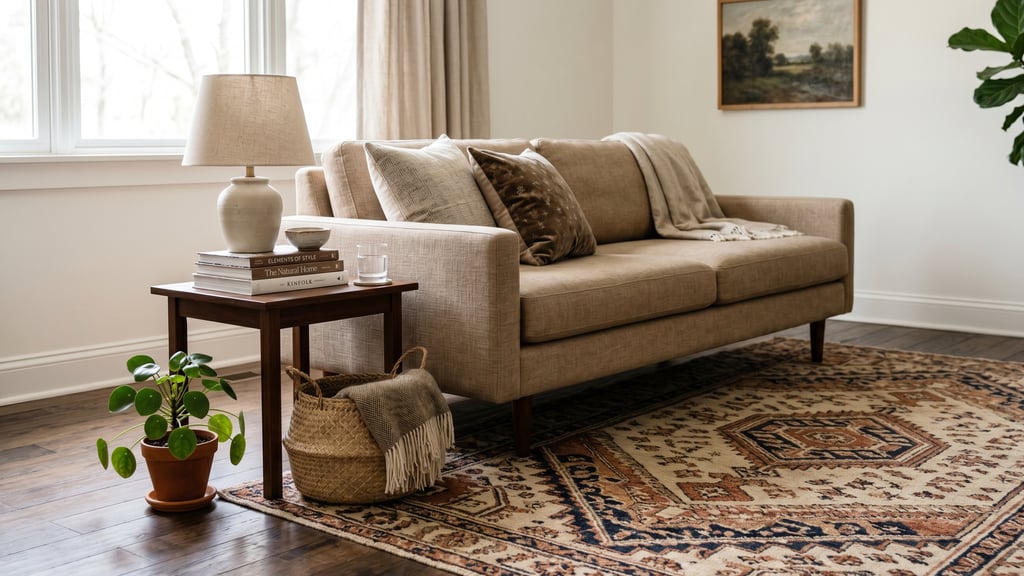
A low-pile area rug , like this RELEANY Area Rug, is the right call here over a thick shag — it resists crushing under daily foot traffic and won't trap dirt the way a high-pile rug will, so it stays looking good far longer. Rule of thumb: the front legs of your sofa should sit on the rug, not float in front of it.
Grab a quality rug pad or try these Home Techpro Vacuum Tech Rug Pad Grippers underneath so it doesn't creep, plus some grip tape Gorilla Grip rug gripper tape strips for the corners if you've got kids or pets barreling through.
The Overhead-Light-Only Mistake That Flattens a Small Living Room
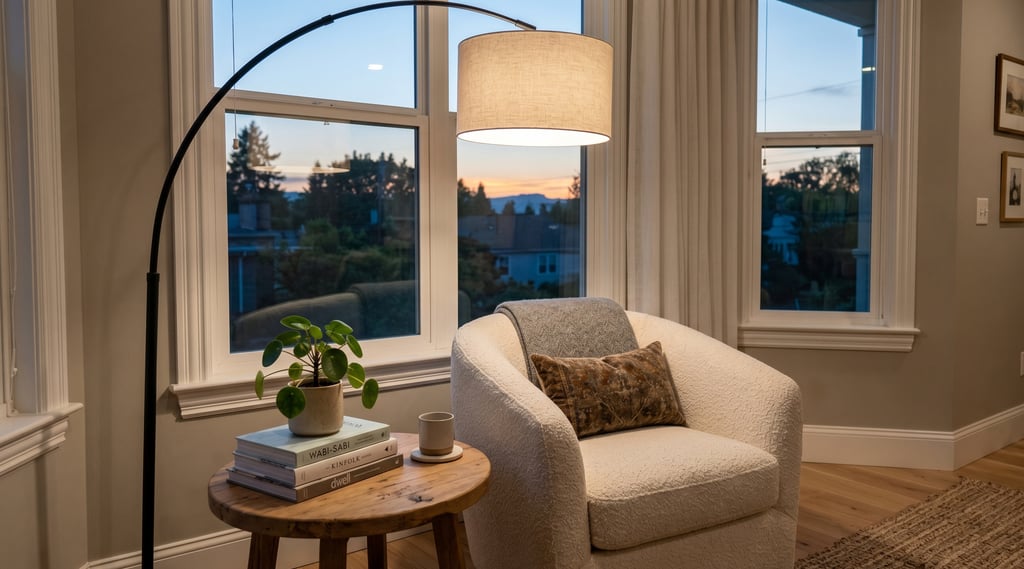
One ceiling fixture doing all the work makes a small room look boxy and flat, because every shadow falls the same direction and the corners go dark and dead. Layering in a floor lamp tucked into an empty corner fixes this almost instantly by pushing light upward and softening the edges of the room.
An arc floor lamp, like this Dimmable Arc Floor Lamp earns its slightly higher price tag here because it reaches over seating without needing a side table or extra floor footprint near a walkway — genuinely useful in a tight layout.
Swap in a warm 2700K bulb like these Linkind Smart Light Bulbs rather than daylight white, which can feel sterile against soft furnishings. Or also try a Smart Dimmer Plug that lets you drop the brightness for evenings without rewiring anything.
Choosing an Oversized Coffee Table That Blocks the Room's Walking Path
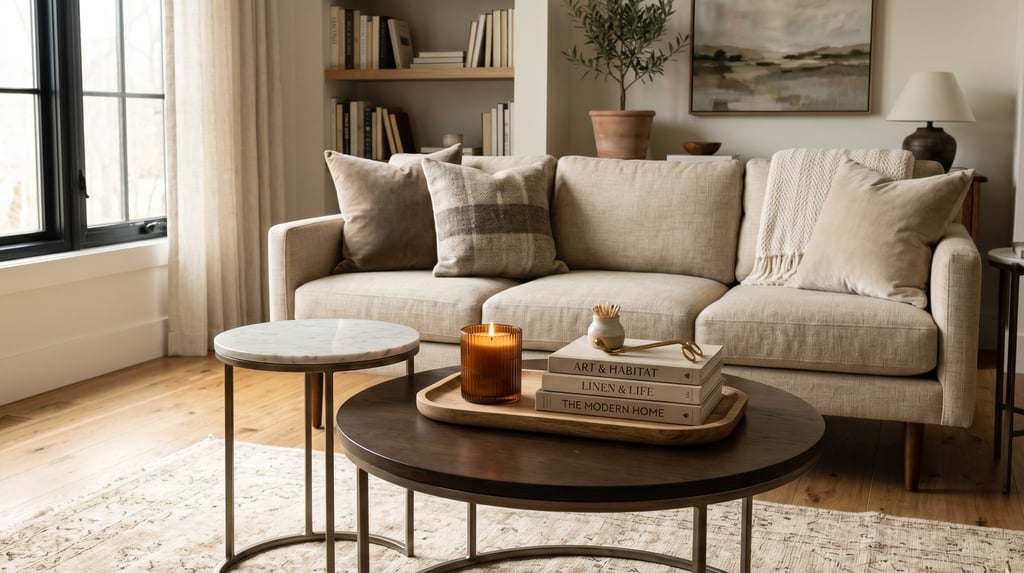
A rectangular coffee table sized for a showroom often eats the one walking path a small living room actually has, forcing everyone to sidestep around it. Switching to a round table — or a nesting pair you can pull apart — removes the sharp corners that make a tight space feel even tighter.
A round nesting set like these Modern Minimalist Round Nesting Accent Coffee Tables beats a single slab table here because you can split the pieces for movie night and consolidate them for everyday traffic flow, and solid wood develops a richer look over time than a laminate top.
Keep at least 14 to 18 inches of clearance on the walking side. Add felt furniture floor pads underneath, and a Catchall Tray on top keeps remotes and mugs from sprawling across the surface.
Forgetting a Statement Mirror in a Room That Needs More Light
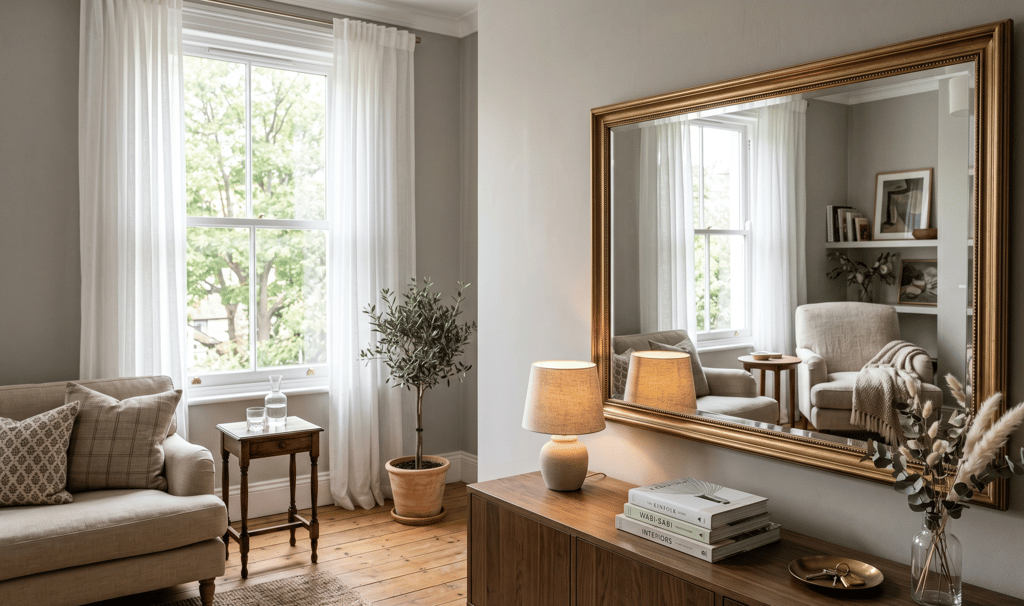
A small living room without a large mirror is missing one of the easiest tricks for adding perceived depth and light. Placed opposite or perpendicular to your main window, an oversized mirror bounces daylight back into the room and doubles the sense of space without adding a single square foot.
A well-made full-frame mirror holds up well over time as long as the frame material is solid rather than a thin composite that can warp in humidity.
Mount it with proper hardware — a heavy-duty French cleat mirror hanger is far more secure for a heavy mirror than a standard hook, and a stud finder ensures you're anchoring into something solid. One thing to avoid: don't place a mirror directly across from clutter or a TV, since it'll double whatever you're trying not to look at.
Shop the Look
Pushing furniture against the wall
Overhead-light-only mistake
Oversized coffee table
Skipping vertical storage
Curtains hung at the window frame
Wrong-scale sofa
Forgetting a statement mirror
I used to think my living room was just small. Like, permanently, hopelessly small. I'd rearrange the furniture every few months hoping for a miracle, and every time I'd end up right back where I started — a couch jammed against one wall, a coffee table I had to angle my knees around, and a low-grade feeling that the room was working against me.
Turns out, it wasn't the room. It was the layout.
Most "small living room" advice tells you to buy less stuff and keep everything pale and minimal, which works fine if that's your style, but it's not the only fix. Layout mistakes are layout mistakes regardless of your palette — and once you spot them, the room opens up no matter what's on your walls.
Here are seven of the most common small-room layout mistakes, and the specific swaps that fix each one.
Skipping Vertical Storage Is Wasting the Best Square Footage You Have
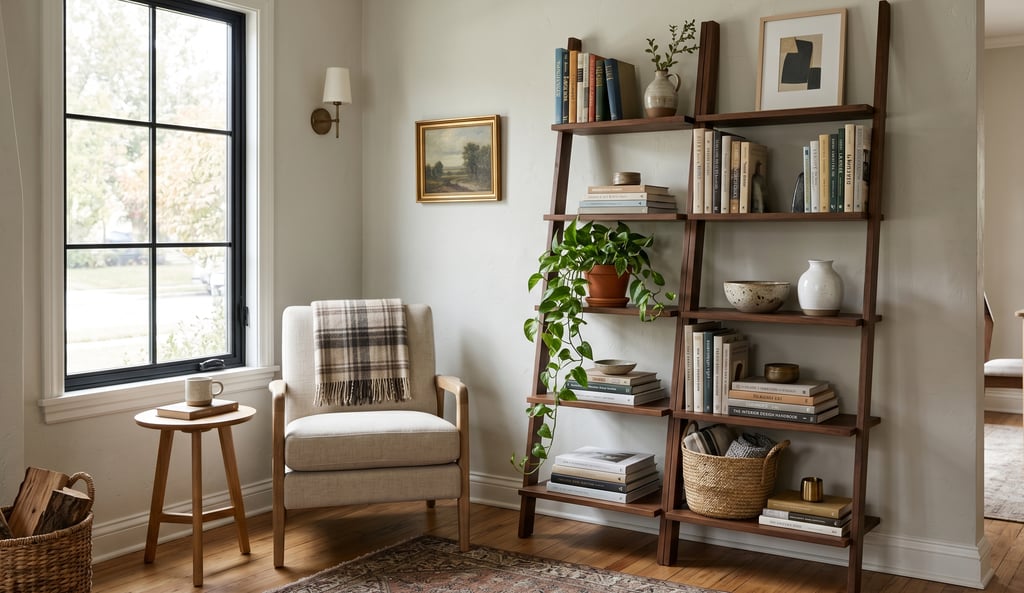
A wide, low media console eats valuable floor space while leaving all the wall height above it empty — and in a small room, that unused vertical space is some of the most valuable real estate you have. A tall, narrow shelf solves the storage problem without widening your footprint.
A ladder-style bookshelf, like this 5 shelves, American Heritage Bookshelf Ladder, is the better choice over a boxy bookcase because its leaning silhouette takes up less visual weight and slots into narrow gaps a traditional shelf can't.
If you've got kids or pets, anchor it with a Anti-Tip Furniture Wall strap— leaning shelves look great but aren't freestanding-stable on their own. A Stud Finder makes sure that anchor point actually holds.
Hanging Curtains at the Window Frame Instead of Higher and Wider
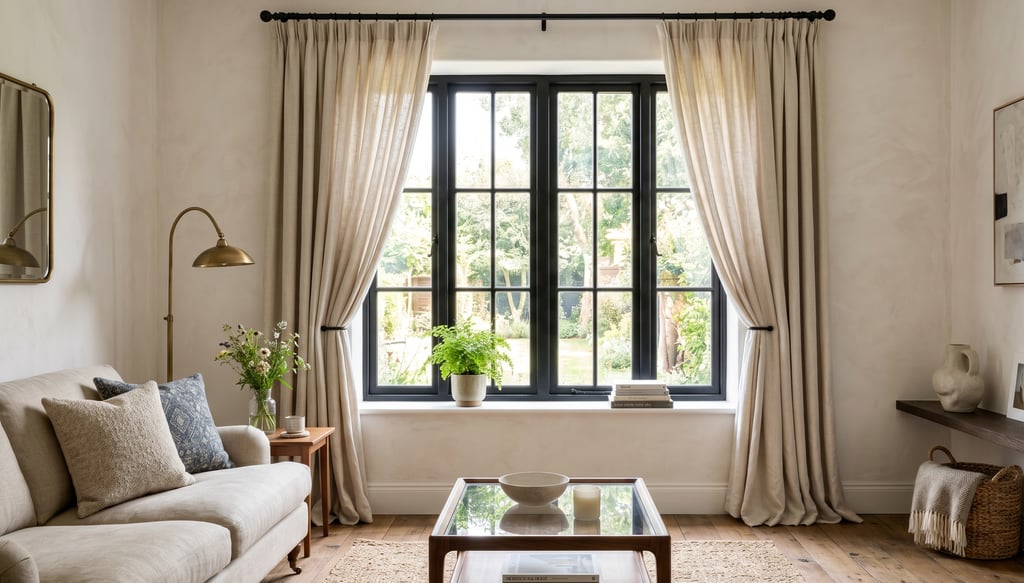
Mounting a curtain rod right at the window frame is one of the fastest ways to make a small room's ceiling feel lower than it is. Moving the rod close to the ceiling and extending it several inches past the frame on each side tricks the eye into reading the whole wall as taller and wider.
An extra-long rod is a budget-friendly fix compared to actually altering a window, and it's an easy weekend project for most renters or homeowners alike. Pair it with Lightweight Linen Panels rather than heavy blackout fabric so they don't swallow light when open.
Rule of thumb: extend the rod 4 to 6 inches beyond the frame on each side, minimum. Curtain rings with clips make panels glide instead of catching.
Buying a Sofa That's the Wrong Scale for the Room
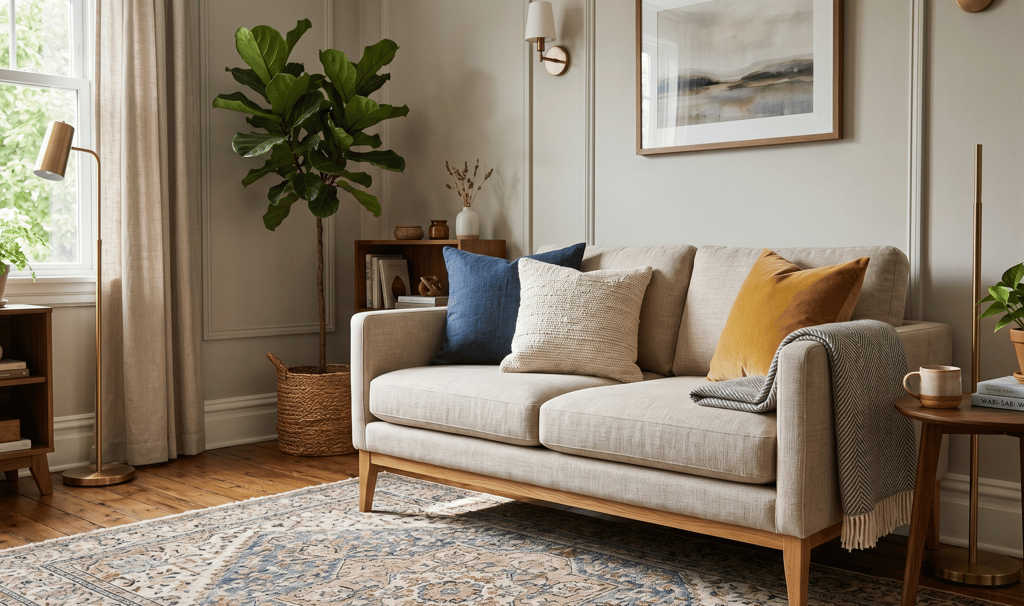
A deep, boxy sofa designed for an open-concept great room will dominate a small living room no matter how you angle it. Going down a size to an apartment-scale sofa or love seat, and choosing one with exposed legs instead of a skirted base, makes the biggest visual difference in the room.
The exposed legs matter more than people expect — light passes underneath the piece instead of stopping at the floor, which makes the whole room read as more open. A performance-fabric love seat like this Mid-Century Modern Love Seat is worth the splurge since it shrugs off everyday wear from kids and pets far better than standard upholstery.
Measure your doorways and stairwells before buying; Furniture Moving Sliders will help make the actual move-in painless, and a Fabric Protector Spray adds extra insurance against spills.
Follow Us
Contact
© 2025. All rights reserved.
2 Fat Cats Home Decor brings stylish, cozy inspiration from living rooms to bedrooms and beyond — helping you create a warm, inviting home you'll never want to leave.