
Transform Your Small Bedroom: 4 Designer Tricks for Small Bedroom Ideas
Discover four designer-approved tricks to transform your small bedroom into a luxurious retreat. Learn about furniture scale, layered lighting, oversized mirrors, and vertical design strategies. Small Bedroom Ideas
BEDROOM
6/14/20264 min read
This post contains affiliate links. If you make a purchase through these links, we may earn a small commission at no extra cost to you.
1. Play with Scale: Why Smaller Furniture Isn't Always Better
The instinct in a small bedroom is to shrink everything — tiny nightstands, a low-profile bed, miniature lamps. But designers know this often backfires, making a room feel like a furniture showroom for a dollhouse rather than a real, lived-in space. The trick is to choose a few pieces with confident scale — like a properly sized bed frame — and keep everything else slim and low-profile.
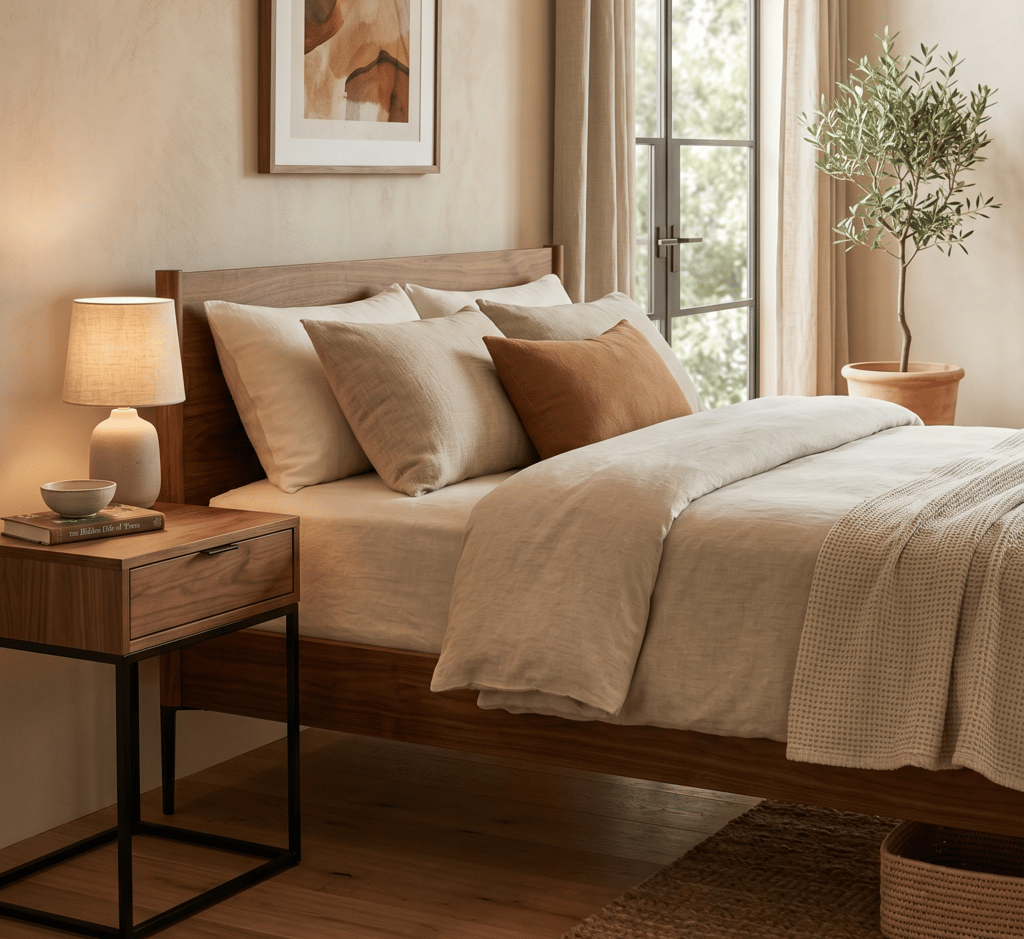
A bed that's appropriately sized for the room (rather than downsized) anchors the space and signals intentional design. Around it, opt for furniture with slender legs and open bases — think a platform bed frame with visible floor space underneath, or a nightstand with thin metal legs rather than a bulky solid block. This visual "breathing room" beneath furniture tricks the eye into perceiving more square footage than actually exists.
2. Layered Lighting: The Fastest Way to Add Depth
Overhead lighting alone flattens a room — it casts even, shadowless light that makes a small space feel more like a storage closet than a sanctuary. Layered lighting, on the other hand, creates pockets of warmth and shadow that add visual depth and make a room feel larger and more atmospheric than it is.
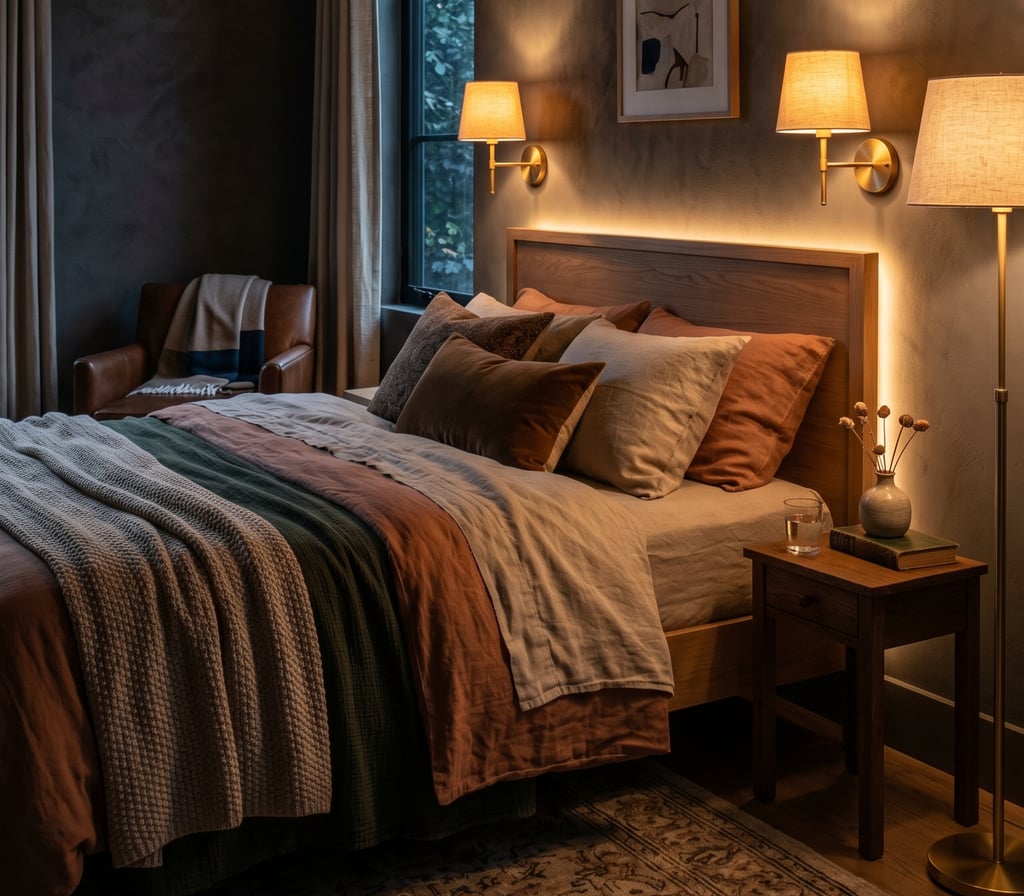
Start by removing lamps from your nightstands (they eat up precious surface area) and replacing them with wall-mounted sconces instead. This frees up the nightstand for styling while adding a soft glow at eye level. Add a floor lamp in an empty corner to draw the eye upward and outward, and finish with warm-toned LED strip lighting behind a headboard or along a shelf for that soft, glowing accent that high-end spaces are known for. Dimmable bulbs throughout let you shift the mood from bright and functional to warm and restful.
3. Mirrors: The Small-Space Secret Weapon
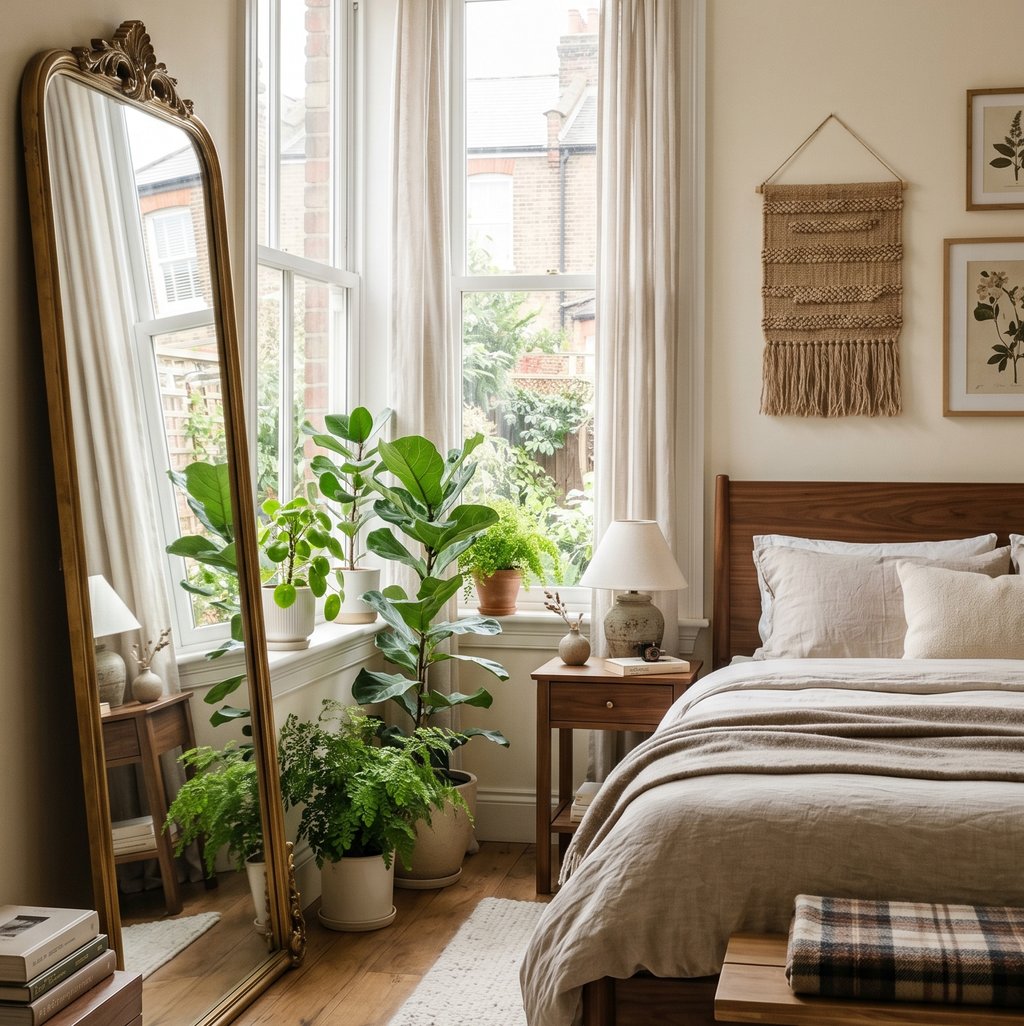
No tool does more for a small bedroom than a well-placed mirror. Mirrors bounce light around a room, visually double the perceived square footage, and add a layer of polish that makes a space feel finished and high-end. The key is going big — a single oversized, leaning floor mirror has far more impact than several small decorative mirrors scattered around.
Position a large mirror across from or adjacent to a window so it reflects natural light deeper into the room. A floor mirror leaned against a wall (rather than mounted) also adds a relaxed, designer-showroom quality that feels intentional rather than purely functional. If floor space is tight, an oversized mirror hung above a dresser or vanity achieves a similar effect while doubling as a styling surface. For an extra layer of luxury, look for mirrors with warm metal frames — brass or aged gold — which add a decorative element even when the mirror isn't reflecting anything in particular.
4. Vertical Design: Drawing the Eye Upward
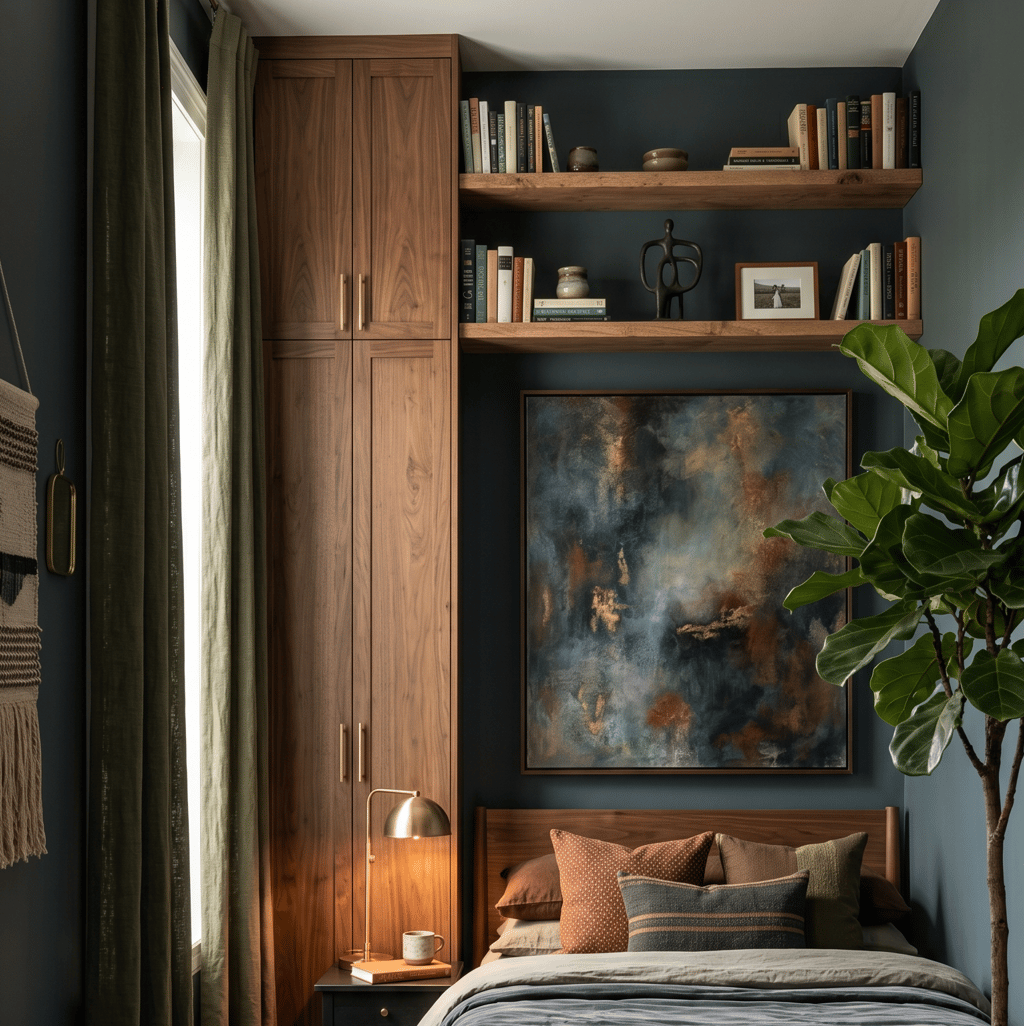
When floor space is limited, the solution is to look up. Vertical design — drapery, shelving, art, and storage that extend toward the ceiling — tricks the eye into perceiving a taller, more expansive room, even when the square footage hasn't changed at all.
Hang curtains as close to the ceiling as possible (rather than just above the window frame) to elongate the walls and create the illusion of higher ceilings. Floating shelves installed above eye level provide storage and styling opportunities without consuming floor space, and a tall, narrow bookcase or wardrobe draws the eye upward rather than outward. Large-scale art — one oversized piece rather than several small ones — also reinforces verticality and adds a confident, gallery-like focal point. Even a tall floor plant in a corner contributes to this upward visual movement, softening the room while making the ceiling feel higher than it is.
Final Thoughts
A small bedroom isn't a limitation — it's an invitation to design with more intention. By choosing furniture with confident scale, layering your lighting, leaning into oversized mirrors, and designing vertically, you can create a space that feels expansive, polished, and genuinely luxurious, regardless of square footage. The best part? Every one of these tricks is achievable on a modest budget and can be implemented in a single weekend.
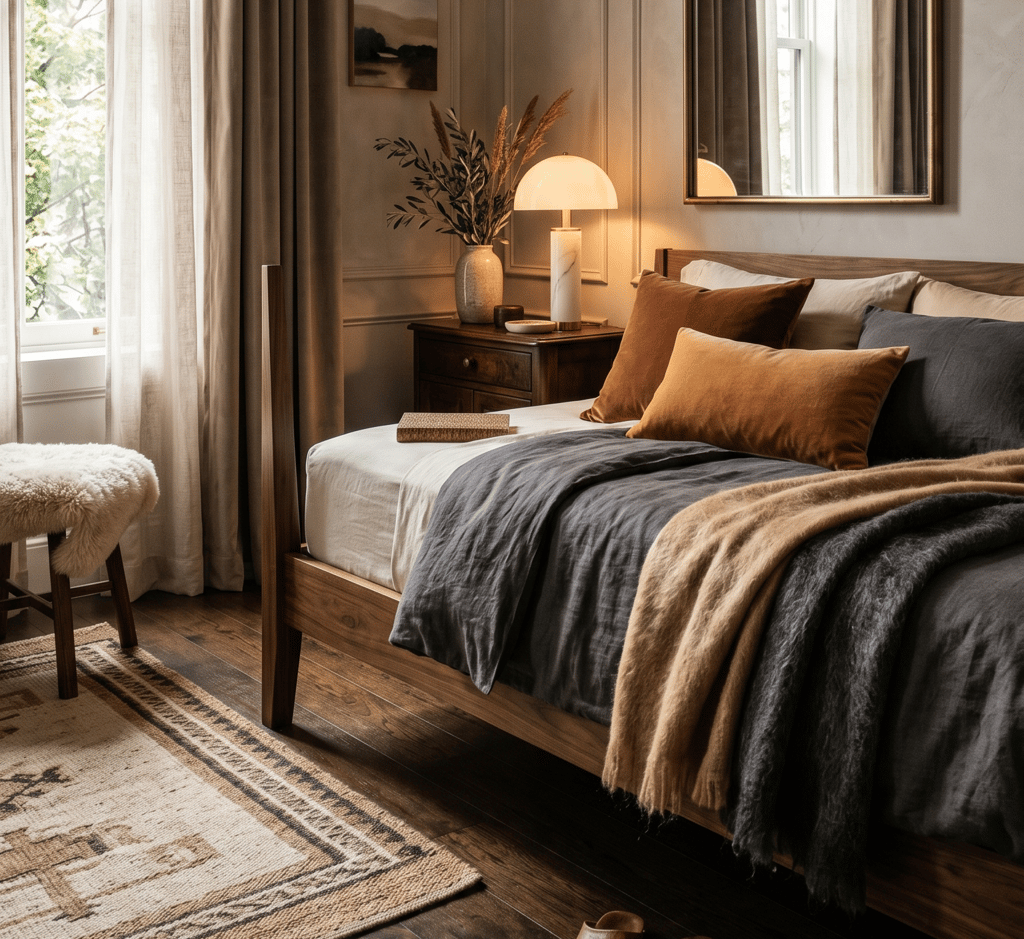
A small bedroom doesn't have to feel small. Some of the most luxurious, editorial-worthy spaces on Pinterest are compact rooms that have been styled with intention — using scale, light, reflection, and verticality to create the illusion of space without sacrificing an ounce of style. The good news is that these tricks are some of the most affordable and impactful changes you can make to any room. Below are the four pillars of small-space design that designers rely on again and again.
Follow Us
Contact
© 2025. All rights reserved.
2 Fat Cats Home Decor brings stylish, cozy inspiration from living rooms to bedrooms and beyond — helping you create a warm, inviting home you'll never want to leave.