Small Apartment Pet Zone Ideas When You Don't Have a Mudroom
No mudroom? No problem. Here's how to carve out a stylish, functional pet zone in even the tiniest apartment — from paw-cleaning corners to hidden litter boxes — without losing precious square footage or sacrificing your decor.
PET SPACES
6/14/20269 min read
This post contains affiliate links. If you make a purchase through these links, we may earn a small commission at no extra cost to you.
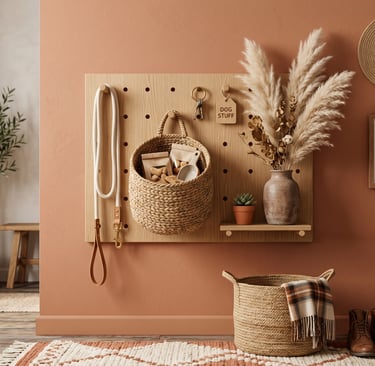
Claim a Corner Instead of a Mudroom
You don't need an entryway to have an entry zone. The trick is picking a dedicated spot — even a small one — and committing to it being "the pet corner," so your dog or cat (and your guests) learn to associate that space with arrivals and departures.
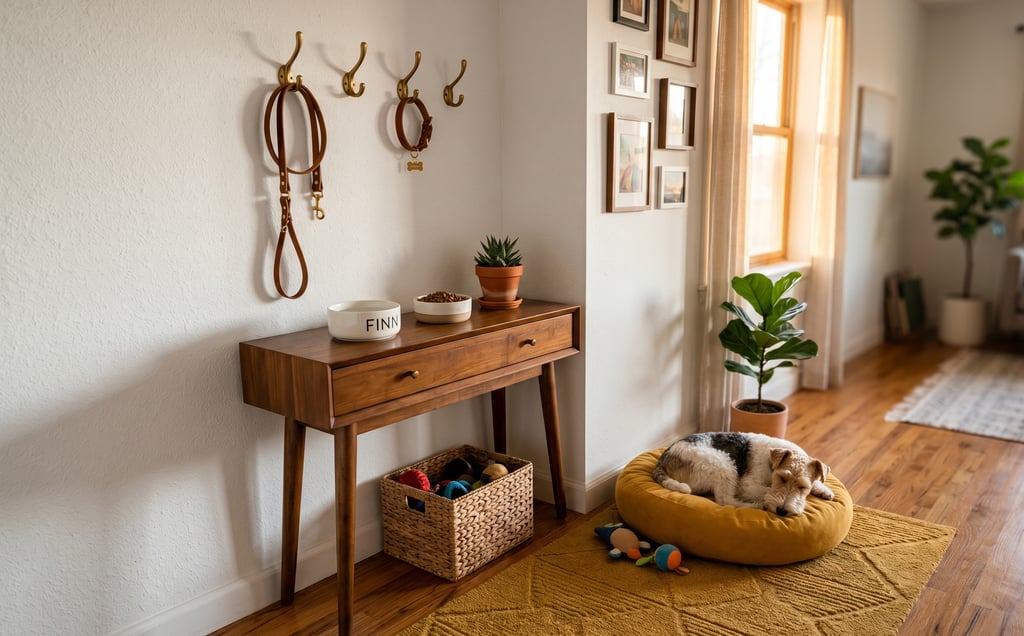
Look for dead zones first. The sliver of wall behind your front door, the empty triangle next to a bookshelf, or the unused space under a console table are all candidates. A 2-foot-by-2-foot footprint is genuinely enough if you layer it vertically instead of spreading out horizontally. Apartment pet zones work best when they go up, not out.
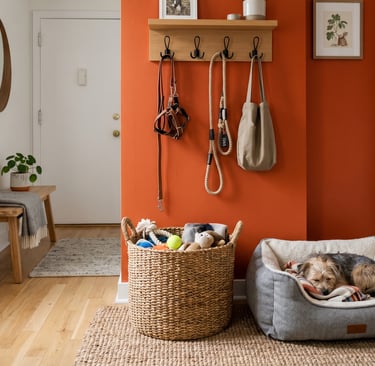
Once you've chosen your spot, define it visually. A small rug or mat instantly signals "this is the pet area" without needing a wall or door to separate it. Choose a pattern or color that pops against your flooring so it reads as intentional decor rather than an afterthought. This is also where a mid-century modern aesthetic shines — clean lines, warm wood tones, and a single statement color can make a tiny corner feel curated instead of cluttered.
A few starting pieces that work well for corner zones:
Go Vertical: Wall Storage for Leashes, Gear, and Everything Else
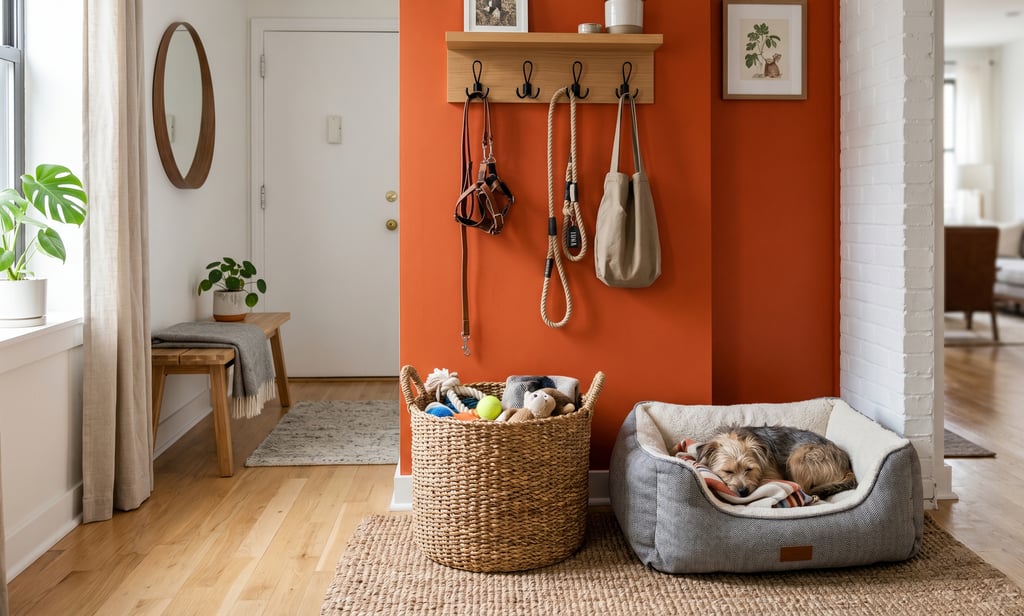
Floor space is the most expensive real estate in a small apartment, so the smartest pet zones barely touch the floor at all. Vertical storage — shelves, pegboards, hanging racks — lets you store an entire pet's worth of gear in a strip of wall that's currently doing nothing.
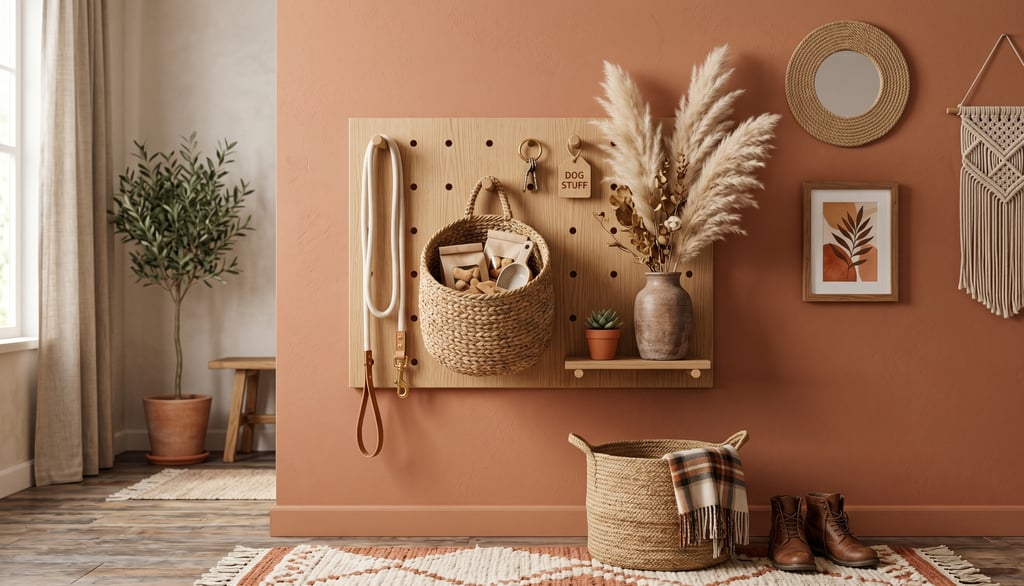
A pegboard system is one of the most flexible options because it adapts as your needs change. Hang a leash today, swap in a small basket for treats tomorrow, add a hook for a rain jacket next month. Pegboards also photograph beautifully when styled with a few coordinated baskets, which makes them a favorite in boho-inspired apartment layouts where mixed textures and warm neutrals do a lot of the visual work.
If drilling isn't an option (renters, we see you), there are excellent adhesive-mount alternatives that hold serious weight without damaging walls. Look for products rated for at least 5–7 pounds per hook if you're hanging anything heavier than a leash, like a tote bag of grooming supplies.
Don't forget the often-overlooked vertical space above doorframes and beside mirrors — narrow floating shelves fit almost anywhere and are perfect for stacking folded towels or a small bin of waste bags.
Helpful products for vertical pet storage:
Multi-Functional Furniture: One Piece, Five Jobs
When square footage is tight, every piece of furniture needs to earn its keep. This is where a dedicated mudroom bench almost always loses to a smarter, multi-tasking alternative — something that handles seating, storage, and visual anchor for the whole zone.
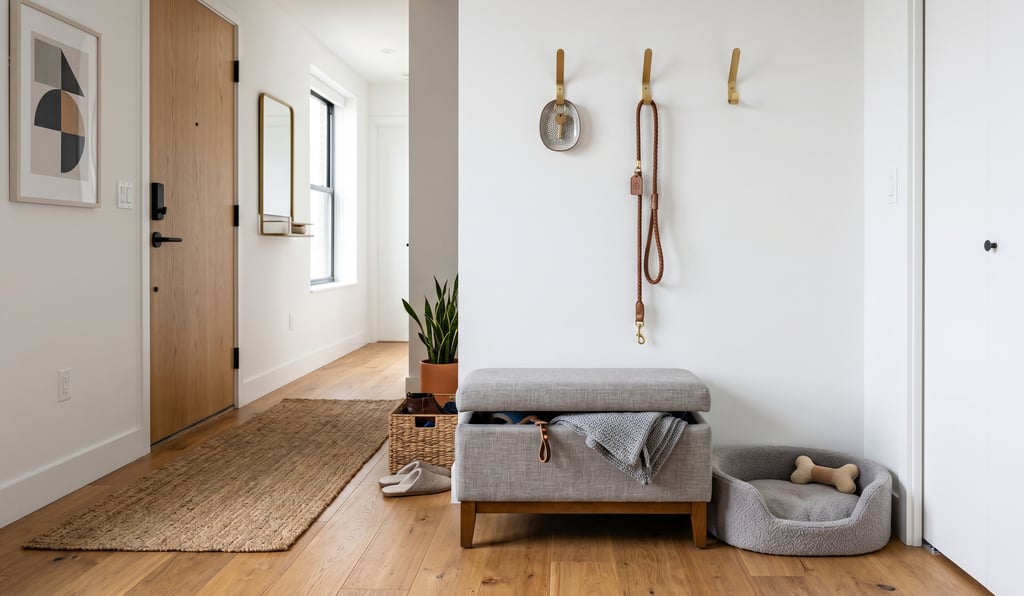
Storage ottomans are an underrated MVP here. They tuck under a console table, hold leashes and grooming tools inside, and double as extra seating when guests come over. Choose one with a removable lid rather than a side-opening panel — it's easier to access quickly when you're juggling a leash and a coffee mug on your way out the door.
Bench-style shoe cabinets are another strong option, especially ones with a cushioned top. You sit down to put your shoes on, your dog's leash hangs on a hook above, and the cabinet below holds towels, poop bags, or a folded travel crate. It's essentially a mini mudroom compressed into 18 inches of depth.
For cat owners, a slim bookshelf or low credenza can double as both general storage and a discreet base for a litter box (more on that below) or a feeding station, especially if you choose one with closed cabinet doors to keep food smells and litter dust contained.
Furniture worth considering:
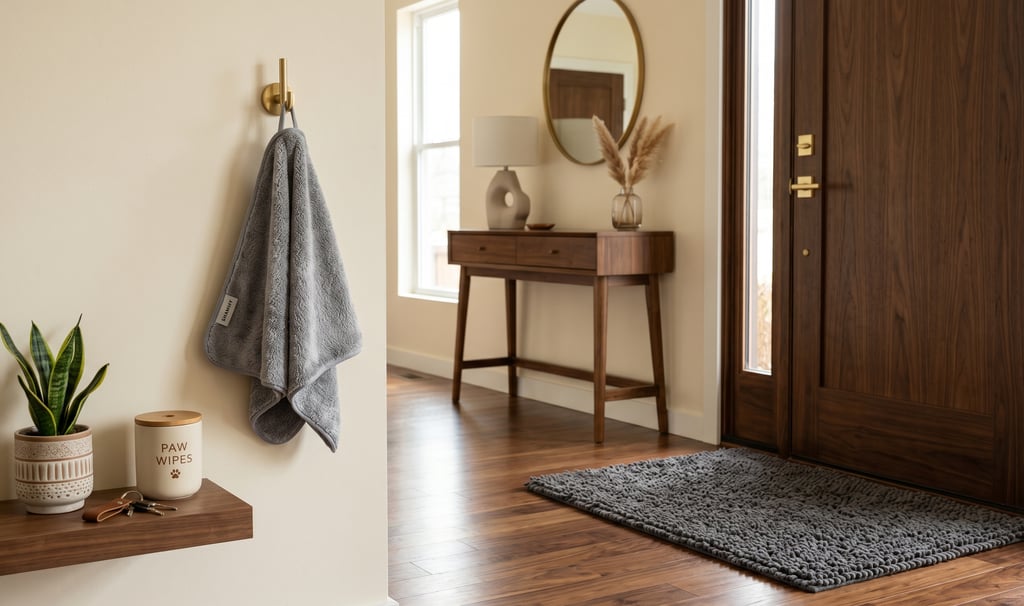
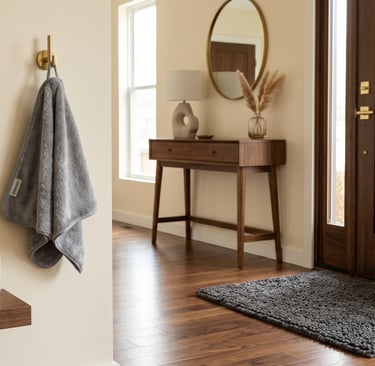
Paw-Cleaning Stations: A Real Towel-Off Spot, Not a Gadget
Let's be honest — the real reason mudrooms exist is mud. Without one, that job falls on whatever surface is closest to your front door, which usually means your floor, your rug, or your favorite pair of socks. You don't need anything elaborate to fix this. You need a spot where your dog can stand still for thirty seconds while you actually towel them off, and the right towel to make that thirty seconds count.
Start with the mat. A thick, chenille-style microfiber mat placed just inside the door gives your dog a defined place to stand — its deep pile and non-slip backing pull water and loose dirt off paws on contact, and it's absorbent enough that even a wet, muddy dog won't track much past it. This is the actual workhorse of the setup, not decoration. The Soggy Doggy Doormat and similar chenille mats are popular for exactly this reason — they're soft enough that dogs don't resist standing on them, and machine-washable when they inevitably get grimy.
Next, the towel itself matters more than people think. A standard bath towel just pushes water around; a shammy-style microfiber towel actually pulls moisture out of fur and off paw pads in a couple of swipes. Look for one with a hand-pocket design so you can get a real grip on a squirmy dog instead of chasing a flat towel around the mat. Keep it hung within arm's reach of your door — a hook or ring mounted at dog-walking height means you're not digging through a closet with one hand while holding a leash in the other.
For the in-between moments — light city sidewalks, a quick bathroom break, no real mud involved — a pack of pet-safe paw wipes is the fastest option and doesn't require a full towel-down at all. Keep a canister of them right next to your mat so wiping down four paws takes ten seconds, not a production. Between the mat, the towel, and the wipes, you've built a real paw-cleaning routine without needing a single gadget.
Products that make this routine work:
Cozy Bedding Corners and Crate Nooks
Every pet zone needs a place to actually relax, not just transition through. Even in a small apartment, a dedicated bed or crate nook gives your pet a sense of territory — which, in a space where everything is shared, matters more than you'd think.
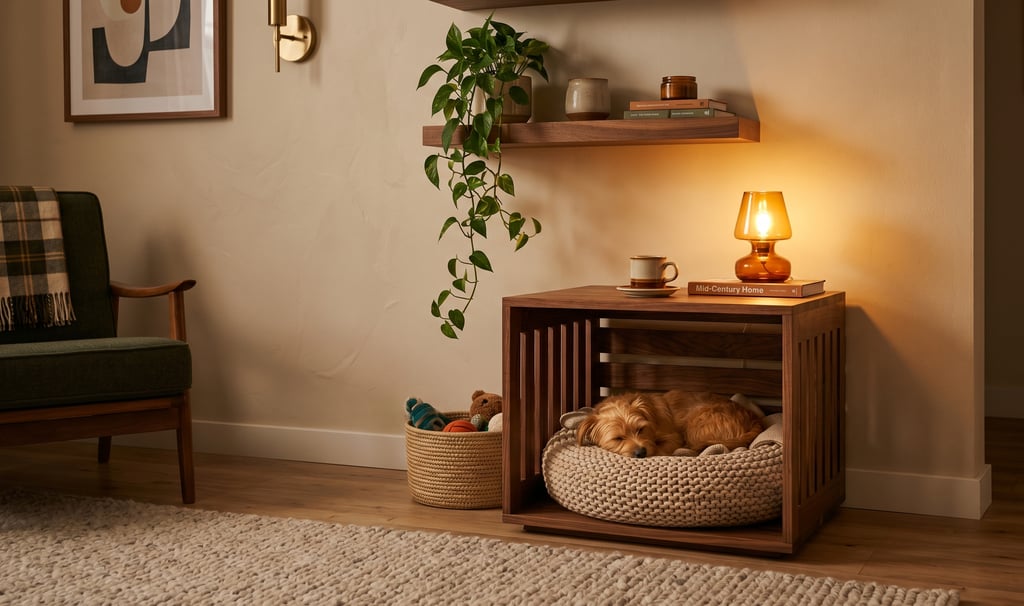
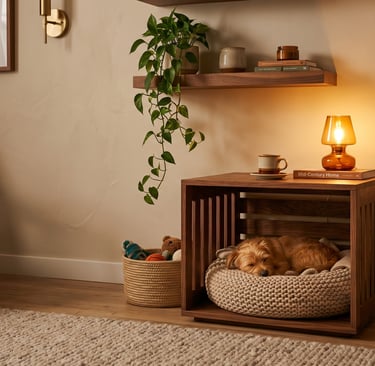
If you use a crate, consider one designed to double as furniture. Crate-end-table hybrids have become widely available and let you skip the "ugly wire box in the corner" problem entirely. Drape a soft blanket over the top and it becomes a side table for your lamp or coffee mug during the day, crate by night.
For pets who prefer an open bed, choose one sized to actually fit your nook rather than a generic "medium" that overhangs the space. Round, low-profile beds tend to suit corner placements better than rectangular ones, and a removable, washable cover is non-negotiable in a small apartment where odor and hair control matter more than usual.
Layering is what makes a small bedding nook feel intentional rather than incidental. A textured throw, a low-hanging plant, or a small piece of wall art above the bed all help the corner read as a designed feature of your apartment instead of a pile of pet stuff shoved out of the way.
A few cozy-corner essentials:
Why Apartment Dwellers Need a "Mudroom Mindset" — Even Without the Room
If you've ever wiped muddy paw prints off your hardwood floors with a hand towel because you didn't have anywhere better to do it, you already understand the problem. Mudrooms exist for a reason: they catch the chaos before it spreads into the rest of the house. Apartments, especially smaller ones, rarely have that luxury. Instead, your "entry" might be a three-foot stretch of wall by the front door, or worse, just the door itself with no buffer zone at all.
The good news is that a mudroom isn't really a room — it's a function. It's a place to store leashes, dry off wet paws, stash food and water bowls, and give your pet a spot that feels like theirs. Once you start thinking about it that way, you realize you don't need four walls and a tile floor. You need a corner, a wall, or even a single piece of smart furniture that does the job in miniature.
This guide walks through real, apartment-tested ideas for building a pet zone that punches above its weight. We'll cover vertical storage, multi-functional furniture, paw-cleaning stations, feeding nooks, litter box concealment, and the tools that make installing any of it painless. Every section includes product suggestions you can actually buy this week, plus an image concept if you're the type who likes to visualize before you commit.
Whether you've got a 450-square-foot studio or a one-bedroom with a stubborn landlord who won't let you drill into the walls, there's a version of this that works for you. Let's get into it.
Feeding and Water Zones That Don't Eat Up Floor Space
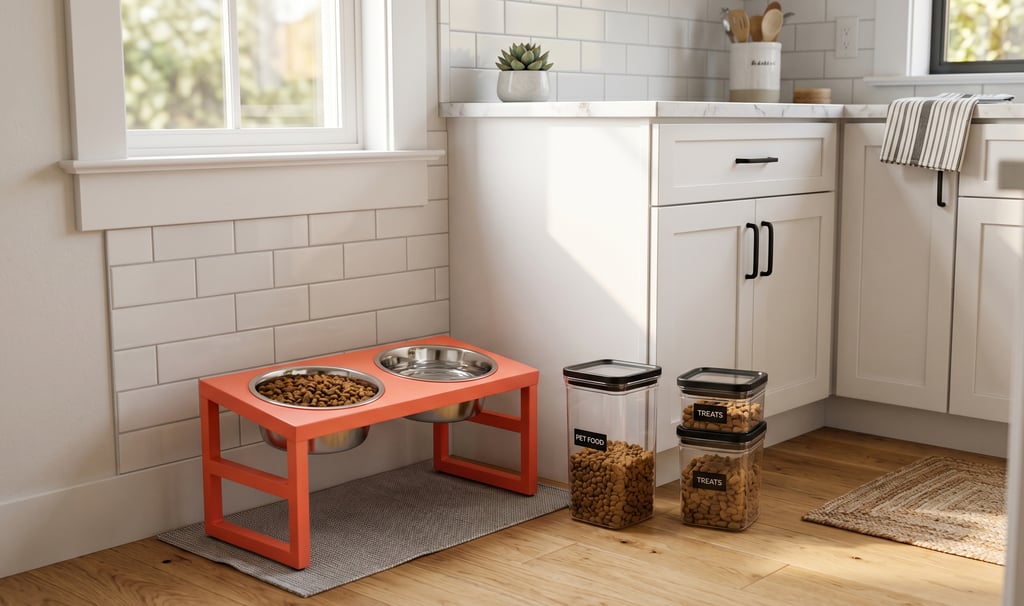
Food and water bowls are deceptively space-hungry. Two bowls plus a placemat can eat up nearly a square foot of floor in a kitchen that already feels cramped — and that's before you factor in the inevitable splash zone.
Elevated feeding stations solve two problems at once: they reduce mess (less leaning, less spilling) and they create a defined, intentional-looking zone instead of two bowls just sitting on the floor. Look for a slim-profile stand that tucks against a cabinet or the side of a fridge, ideally with a built-in tray to catch drips.
If you're really tight on space, consider a pull-out or fold-down feeding tray that mounts to the inside of a lower cabinet. It stays hidden when not in use and folds out at mealtime — a clever trick borrowed from tiny-house design that translates perfectly to apartment living.
Storage for food itself matters too. Airtight, stackable containers keep kibble fresh and let you ditch the bulky factory bag, which rarely fits anywhere gracefully. Choose containers with a flat back so they slide neatly into a cabinet or the base of your console table from the corner zone we talked about earlier.
A few favorites for feeding zones:
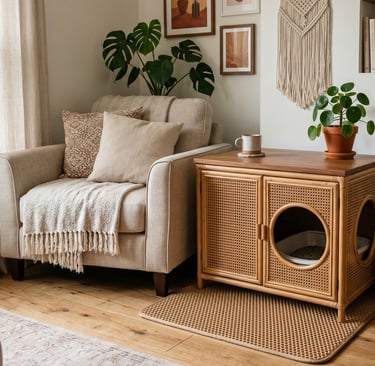
Litter Box Concealment for Cat Owners in Small Spaces
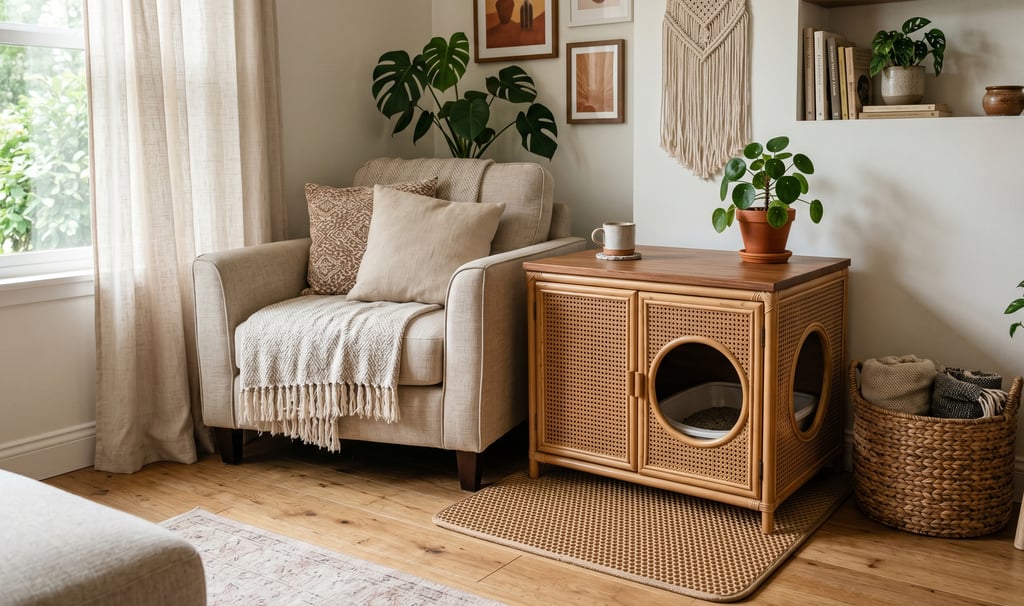
If you share your apartment with a cat, the litter box is probably the single hardest thing to make peace with visually. Without a mudroom, basement, or spare closet, it often ends up in the bathroom, the bedroom, or — worst case — right in the open living area. Concealment furniture has come a long way, though, and a few smart picks can make this a complete non-issue.
Litter box enclosures disguised as side tables or cabinets are the gold standard here. They look like ordinary furniture from the outside — a small end table, a low credenza — while the top lifts or a side panel opens to reveal the litter box within. Place one beside your sofa or at the end of a hallway, and most guests will never know what's inside.
Ventilation matters more than people expect. Look for enclosures with mesh panels, vented doors, or a gap at the base; airflow keeps odor from building up inside a sealed box, which matters even more in a small apartment where smells don't have anywhere to dissipate.
Pair any enclosure with a litter mat that catches stray granules before they spread to your floors, and consider a small attached or nearby storage bin for scoops and extra litter bags — keeping cleanup supplies within arm's reach makes you far more likely to actually stay on top of maintenance.
Concealment products worth a look:
Bringing It All Together
A mudroom is genuinely nice to have, but it's not the only way to give your pet — and your floors — the structure they need. Once you start treating "pet zone" as a function rather than a room, a corner, a wall, or a single piece of clever furniture can do everything a mudroom would, just scaled down to apartment size.
Start small. Pick one section from this list — maybe the paw-cleaning station, since it solves the most immediate daily annoyance — and get that piece in place before moving on to the next. Within a few weekends, you'll have a fully functional, good-looking pet zone tucked into a space you didn't even realize you had.
Follow Us
Contact
© 2025. All rights reserved.
2 Fat Cats Home Decor brings stylish, cozy inspiration from living rooms to bedrooms and beyond — helping you create a warm, inviting home you'll never want to leave.