9 Stylish Cat Trees For the Best Cat Trees for Modern Homes
Find the best cat trees for modern homes — minimalist, boho, and contemporary picks that look great and your cat will actually use. The best cat trees for modern homes blend feline function with design you'll actually want in your living room — no more hiding the scratching post in a corner.
PET SPACES
6/28/20269 min read
Final Thoughts
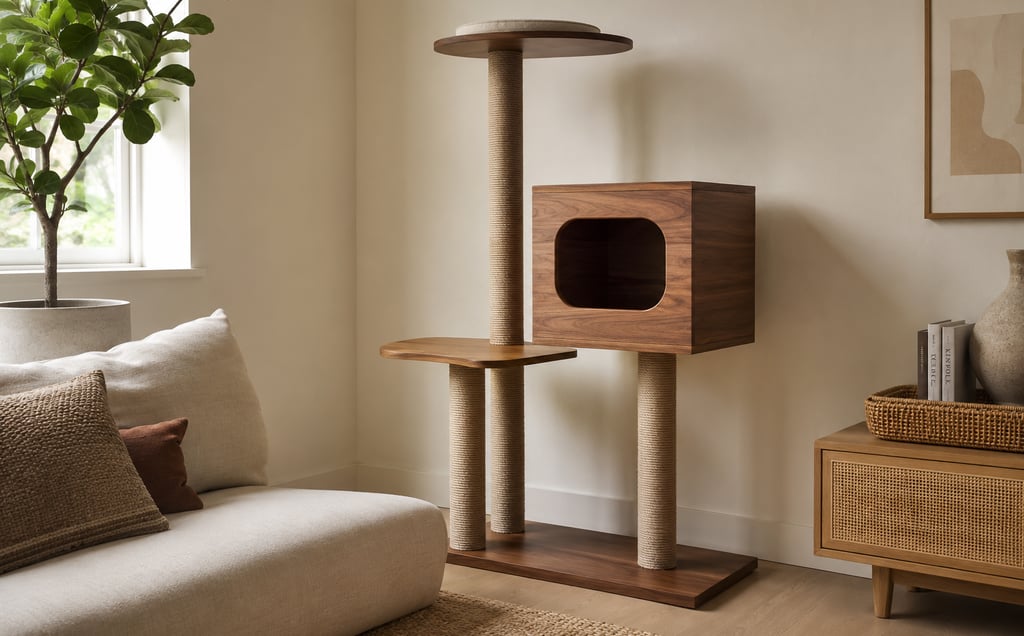
The right cat tree genuinely changes the dynamic of a room — your cat gets what they need, you get furniture you're not embarrassed by, and the space feels more considered, not less. The shift in cat furniture design over the last few years means you don't have to compromise anymore. Natural materials, thoughtful proportions, and neutral palettes are increasingly the standard rather than the exception.
Start with one piece — a tree that fits your dominant aesthetic and the room where your cat actually spends time. Get the placement right before adding wall shelves or a second piece. Small, deliberate steps make a bigger difference than a complete overhaul, and you'll have a much better read on what your cat actually uses before you invest further.
Every cat owner reaches a point where the battle between "I love my cat" and "I love my home" feels genuinely unwinnable. Standard cat trees — the ones covered in carpet remnants in a depressing shade of gray or beige — look like they belong in a vet waiting room, not a thoughtfully decorated apartment. But your cat still needs to climb, scratch, perch, and survey the room like the tiny landlord they believe themselves to be.
The good news is that the cat furniture space has completely transformed. Designers are finally making cat trees that work with your aesthetic, not against it — think natural sisal, walnut-toned wood, and modular platforms that look more like modern sculpture than a pet-store impulse buy. Whether your place skews minimal and Japandi, lived-in and boho, or clean and contemporary, there's a stylish cat tree that belongs in your space. Here's what's worth buying.
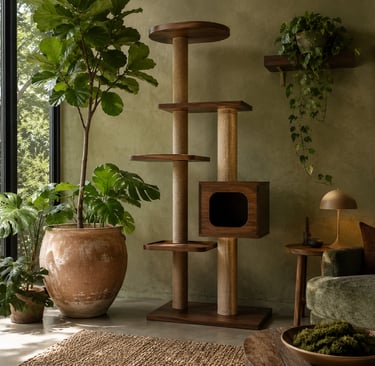
Cat trees that don't ruin your decor (what to actually look for)
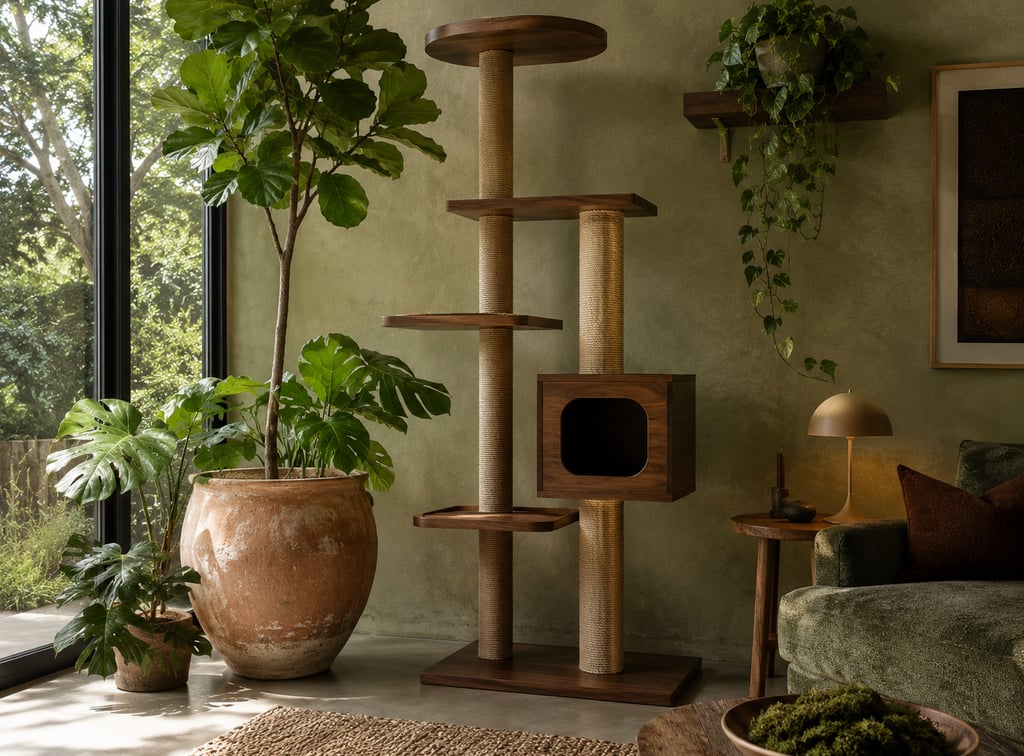
The single biggest thing that makes a cat tree look cheap is the material on the platforms. Carpet — especially low-pile gray or tan carpet — reads as afterthought, full stop. When you're shopping, you want platforms surfaced in wood veneer, faux fur in a tone that reads as intentional (warm cream, charcoal, camel), or wrapped in natural sisal. The structural material matters too: solid wood legs and posts look designed; hollow particleboard with a wood-print wrap does not hold up visually or structurally.
Think about scale. A massive, multi-level tower with six platforms can look architectural and statement-worthy in a tall-ceilinged room — but that same piece in a small studio reads as chaos. For compact spaces, a two- or three-level tree with clean lines and a small footprint does more for your room than a sprawling complex ever will.
Color is your friend here. The Sopapets Hi-Lo Modern Cat Tree comes in neutral colorways that genuinely coordinate with furniture rather than fighting it. If your space is mostly warm neutrals, lean into a walnut or natural wood base. If you're going monochromatic and modern, a white or charcoal matte tree disappears into the room in a way that reads deliberately styled.
Quick tip: Search Amazon for "modern cat tree walnut wood" or "minimalist cat tree natural sisal" to filter out the carpet-covered options fast.
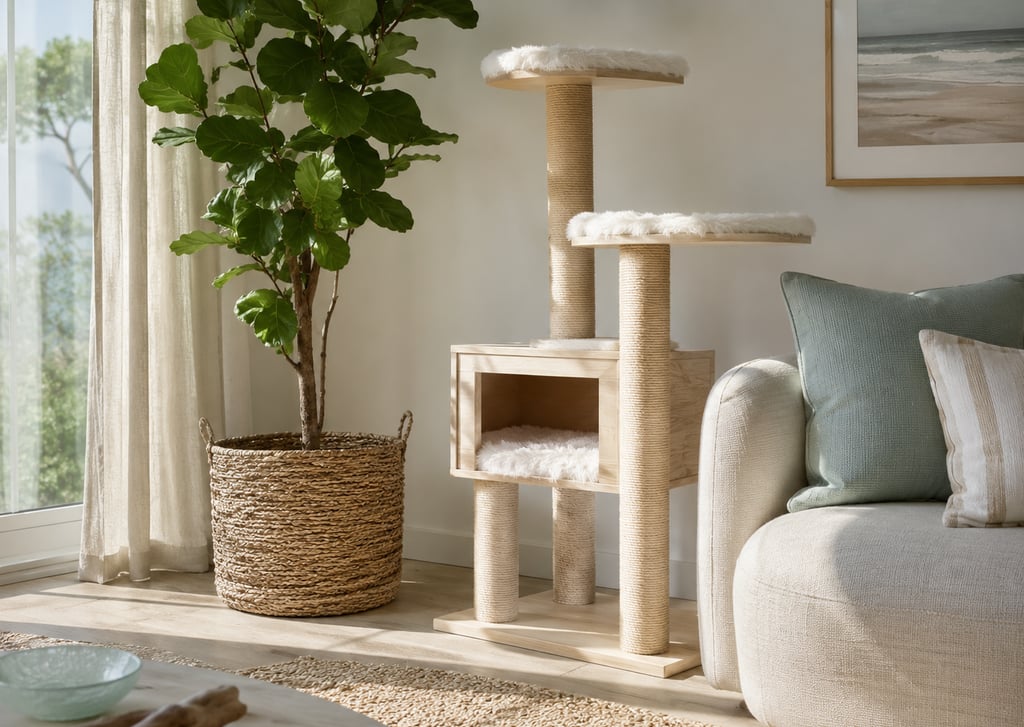
Wall-mounted cat shelves for small apartments
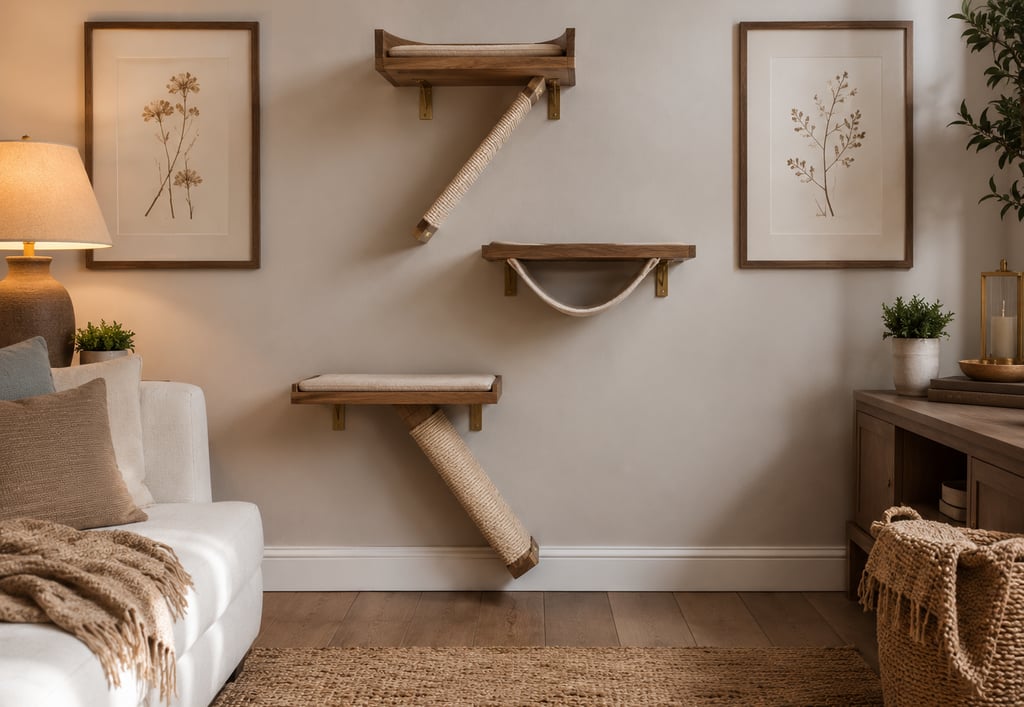
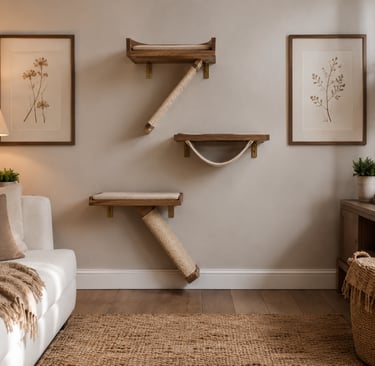
If floor space is precious, wall-mounting is the single best move you can make. A well-placed set of cat wall shelves does double duty: it gives your cat vertical territory to roam and perch, and it looks like intentional wall décor rather than a concession to pet ownership. Done right, a cat shelf gallery wall is genuinely one of the more design-forward things you can do in a rental.
The key is treating cat shelves like you'd treat any gallery wall — with intention around spacing, height variation, and visual rhythm. Stagger the shelves at different heights rather than lining them up at the same level. Mix a climbing ramp or two in with the flat platforms. Add a hammock element for visual softness and because cats will absolutely use it.
The Fukumaru wall-mounted cat hammock set is one of the better-looking options in this category — the iron brackets have a mid-century silhouette and the hammock fabric comes in colors that coordinate with actual furniture. For the shelves themselves, the CatastrophiCreations Cat Mod Garden Complex installs cleanly and can be rearranged as your layout changes. I've seen this setup in small rentals where the cat wall literally replaced a gallery wall that wasn't working — the effect is striking.
The best cat trees for large cats and heavy climbers
If you share your home with a Maine Coon, a Ragdoll, or any cat that registers as "surprisingly heavy" when they sit on you, standard cat trees are a liability. Most affordable trees are engineered for average-sized cats — the platforms are too small, the posts aren't reinforced, and the whole thing wobbles dangerously within six months of regular use. A large cat needs a tree rated for their weight with a wide, heavy base and thick sisal posts.
The Globlazer Huge Cat Tree is one of the few truly robust options that doesn't sacrifice too much on aesthetics — the base is solid and the configuration includes multiple large platforms and a condo box with enough interior room for a 15-pound cat to actually fit. For something more design-conscious, the Mao 73-inch Faux Fur Cat Tree comes in a warm gray faux fur that reads more like a texture-forward design choice than an afterthought, and the footprint is stable enough for heavy climbers.
Platform depth is the spec most people overlook. A large cat needs at least 12×12 inches of usable surface to comfortably sit without hanging off the edges. Anything smaller and your cat will simply stop using the upper levels, leaving you with a very expensive scratching post.
Budget pick vs. splurge pick: cat trees worth the money
Here's where it gets honest. You don't have to spend $300 on a cat tree to get something that looks good — but you do need to spend at least $60 to get something that holds up structurally and doesn't visually assault your space. The sweet spot for most people is somewhere in the $80–$150 range.
Budget pick ($55–$85): The Yaheetech 54-inch Cat Tower is genuinely one of the better affordable options right now. It's not going to fool anyone into thinking it's designer furniture, but the proportions are reasonable, the sisal coverage is generous, and the condo box is actually cat-sized. For renters who aren't precious about their aesthetic and just want something functional that isn't an eyesore, this works.
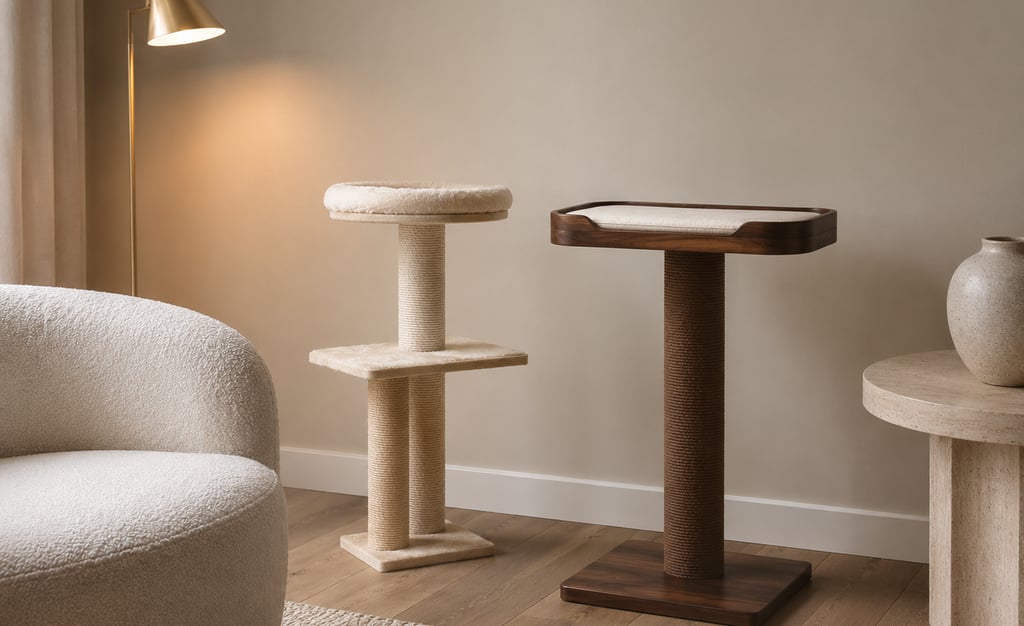
Splurge pick ($150–$220): The Pawz Road Hi-Lo Modern Cat Tree is the one I'd actually be proud to have in a living room. It's designed to look like a piece of modern furniture — the base and top platform are in a real wood veneer, the sisal post is clean and tightly wrapped, and the proportions are considered. It photographs beautifully, which matters if you ever share your space on social media. Worth every dollar if aesthetics are a priority for you.
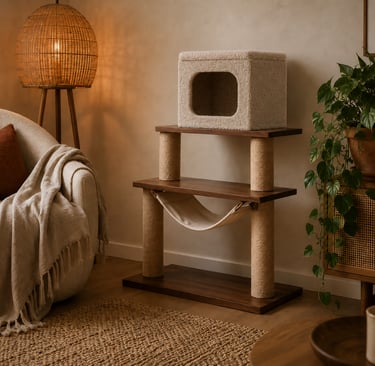
Boho cat trees that fit a rattan-and-linen aesthetic
If your space is built around warm textures — rattan furniture, linen throws, macramé wall hangings, jute rugs — you need a cat tree that speaks that same language. The good news is that natural materials translate beautifully into cat furniture. Sisal is essentially jute's functional cousin, and a cat tree built around thick sisal posts and natural wood tones can look like it was sourced from the same place as your coffee table.
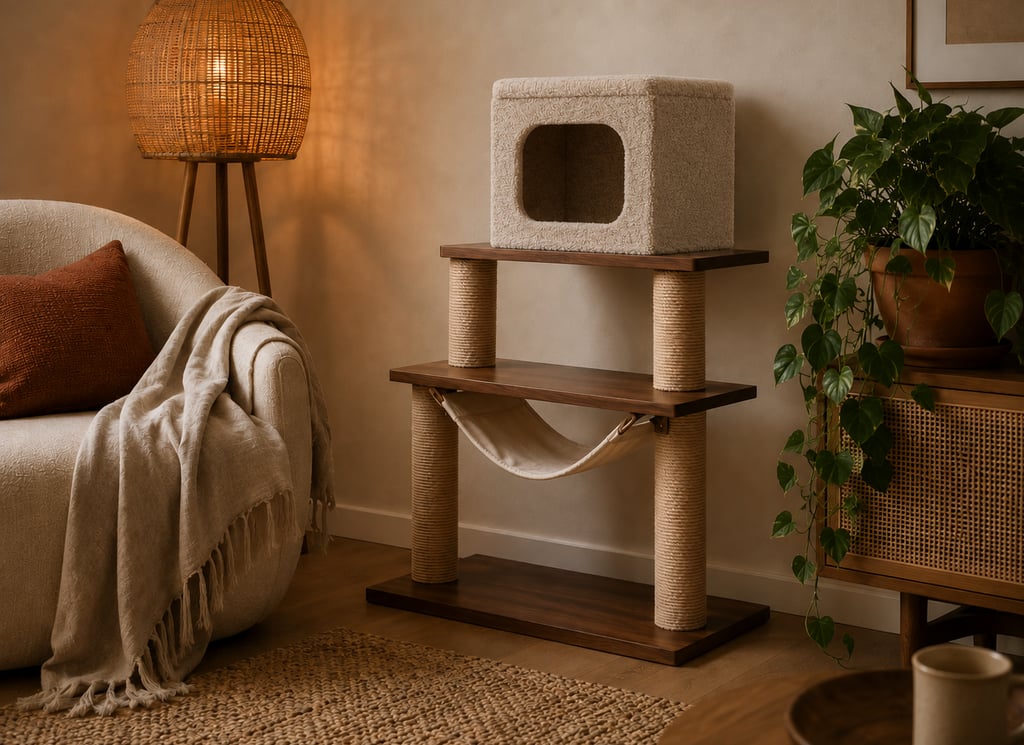
Look for trees with woven or fabric hammock inserts rather than carpet-lined condos. This Modern Cat Tree with Hammock does this well — the hammock fabric hangs in a casual, organic way that echoes the energy of a woven pendant light. Pair it with a few trailing plants nearby and it genuinely reads as a styled corner rather than a pet zone.
Avoid trees with carpeted platforms in any color
Prioritize natural sisal over synthetic rope
Wood tones in honey, walnut, or natural birch blend best with boho interiors
A hammock or canvas sling element adds softness that hard platforms don't
This Modern Cat Tree with Natural Sisal Posts is a solid find in this category — the combination of sisal posts and a fabric-wrapped platform sits comfortably in a layered boho room without drawing the wrong kind of attention.
Cat trees for multi-cat households
One cat is manageable. Two or three cats introduce territory dynamics that a single small tree simply cannot resolve — what you end up with is one cat claiming the top platform and the others ignoring the whole thing. Multi-cat homes need either multiple pieces of cat furniture or a single piece that's genuinely large enough to give each cat their own claimed spot without contact.
Height is the primary currency in multi-cat dynamics. The cat who gets the highest perch wins, socially speaking. A tall tree with clearly separated platform levels — rather than an open tower where cats can see each other from any point — reduces conflict and gets more use from all your cats. The Tangkula multi-level Faux Fur Cat Tree has enough height and platform separation to work for two or even three cats of average size.
For a design-forward approach to multi-cat furniture, wall systems are even better than freestanding trees. A wall-mounted shelf system can be configured to give each cat a separate climbing path and perch, and because the pieces are spread across more of the wall, no single cat can "guard" the whole setup. The Catastrophic Creations modular wall set is configurable enough to grow with your cat count.
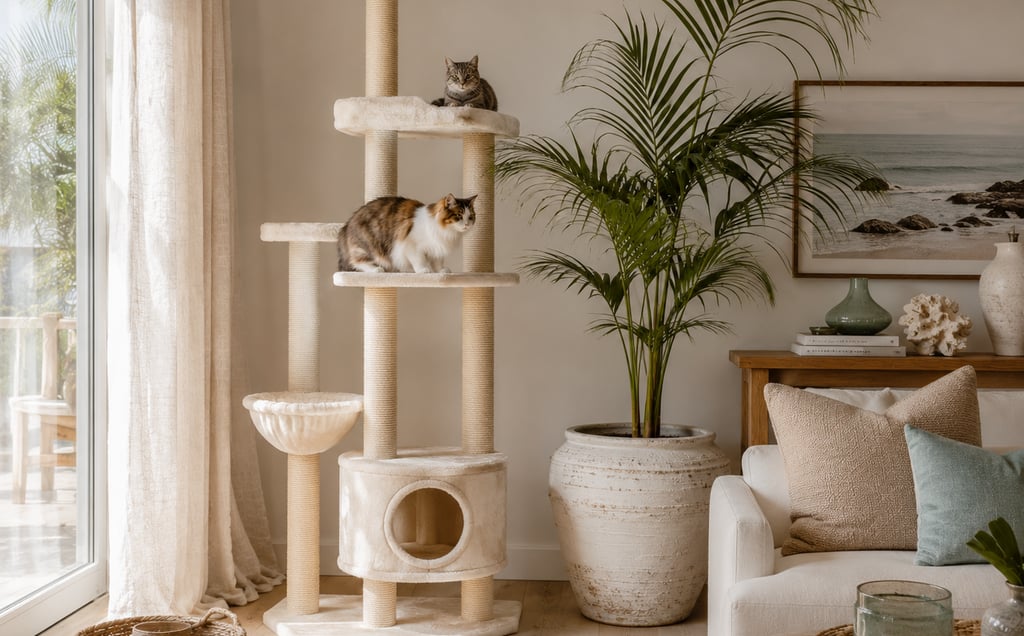
How to place a cat tree so it actually looks intentional
Where you put a cat tree matters as much as which one you buy. A beautiful, well-designed cat tree shoved in a random corner because "that's where it fits" still reads as an afterthought. The placements that work — the ones that look like the cat tree belongs — follow the same logic as any other furniture placement.
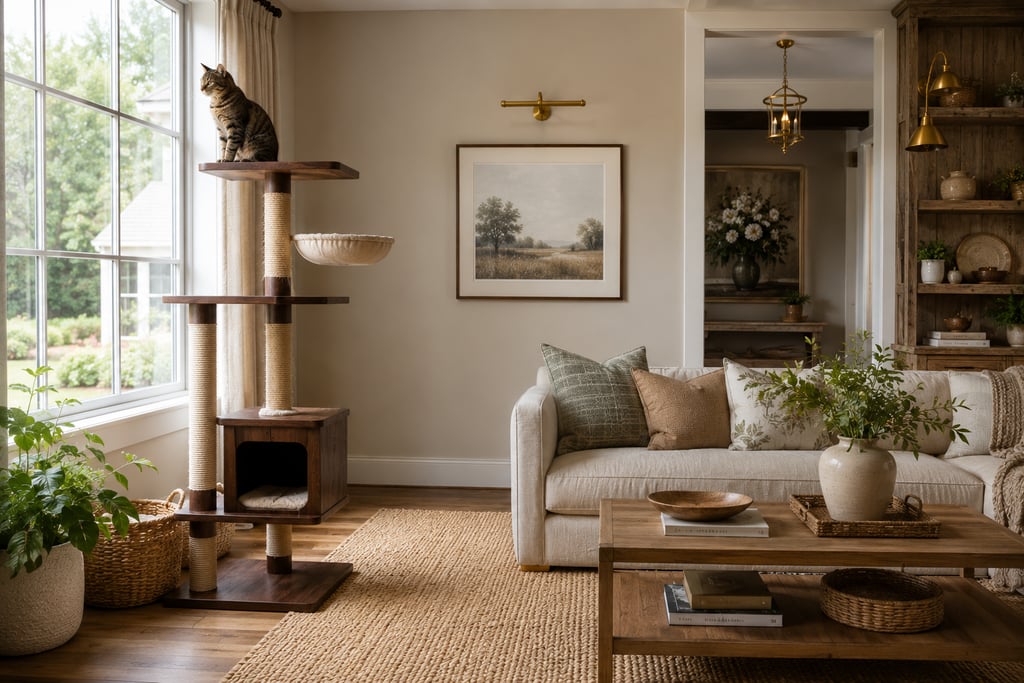
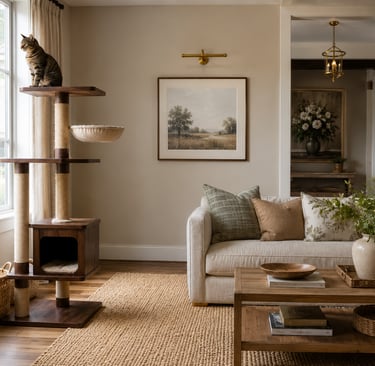
The single best location for a cat tree is near a window with a view. This is functional (cats are endlessly entertained by birds and movement outside) and design-forward: a cat tree beside a window reads like an indoor plant in terms of the visual softness it adds to that wall. You're filling vertical space in a way that feels considered rather than utilitarian.
A few other placements that work well:
Corner placement with an adjacent plant creates a "nature nook" that feels styled
Against a blank wall with a piece of art hung above transforms the tree into part of a wall moment
Near the sofa signals to your cat that this is their version of your comfortable perch — and they'll actually use it
Whatever you do, avoid placing the cat tree in a high-traffic path. A tree that people walk around constantly will eventually become invisible background noise — you stop seeing it, which means you stop caring about how it looks, which means it becomes an eyesore by default.
Frequently Asked Questions
What is the best cat tree that doesn't look ugly? The best-looking cat trees for modern homes tend to use natural sisal, wood veneer or solid wood, and neutral fabric in place of carpet. The Hepper Hi-Lo and On2Pets designs are frequently cited for being genuinely attractive. The key differentiator is platform material — wood or quality fabric reads as intentional design; carpet almost never does.
Are wall-mounted cat shelves better than a cat tree for small apartments? For apartments with limited floor space, wall-mounted cat shelves are often the better solution. They free up floor space entirely, give cats the vertical territory they want, and can be styled to look like part of a gallery wall. The tradeoff is that installation is more involved and you'll need to locate studs or use appropriate wall anchors. The Catastrophic Creations wall set is a good starting point for renters willing to patch a few holes when they move.
How tall should a cat tree be for indoor cats? Most cats benefit from a cat tree that reaches at least 48–54 inches — enough to give a meaningful high perch. Taller isn't always better if the platform sizes shrink to accommodate the height. For large cats or multi-cat households, a 60–72 inch tree with wide platforms gives the best use. For small apartments with low ceilings, a 36–48 inch tree with wall-mounted shelves above it covers the full vertical range without hitting the ceiling.
Can I put a cat tree near a window in winter? Yes, and most cats prefer it. Cold drafts are a real consideration if your windows are older or single-pane — you'll want to make sure the perch platform isn't pressed directly against the glass. A few inches of clearance and a plush pad on the platform keeps the spot comfortable year-round. The view enrichment is worth it in every season.
What cat tree is best for a cat that ignores them? Cats that ignore traditional cat trees are usually reacting to placement (too far from social areas), instability (the tree wobbles when they jump), or the wrong perch style for their personality. Cats who like tight, enclosed spaces prefer condo boxes; cats who like to survey prefer open, flat platforms. Try relocating the tree near where you spend the most time — cats want to be near you, and proximity to your main space dramatically increases use.
This post contains affiliate links. If you purchase through my links I may earn a small commission at no extra cost to you
Follow Us
Contact
© 2025. All rights reserved.
2 Fat Cats Home Decor brings stylish, cozy inspiration from living rooms to bedrooms and beyond — helping you create a warm, inviting home you'll never want to leave.