
7 Entryway Drop Zone Mistakes (And How to Fix Them)
Your entryway isn't just a walkway — it's the first impression of your home and the last thing you see before you leave it. Here are the 7 most common drop zone mistakes, and simple, stylish fixes you can start this weekend.
HOME ORGANIZATION
6/14/20268 min read
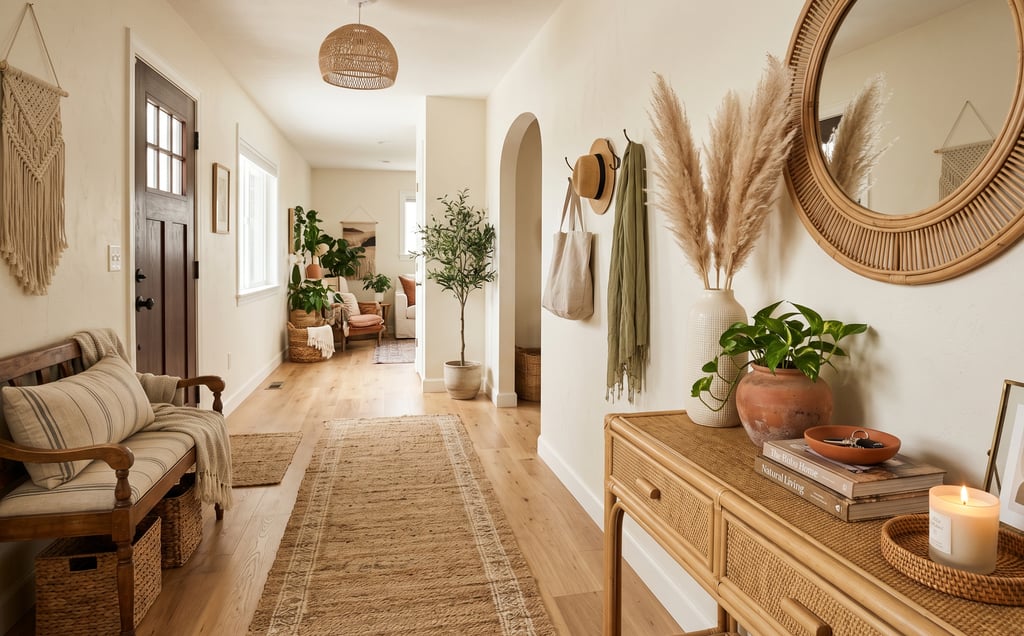
This post contains affiliate links. If you make a purchase through these links, we may earn a small commission at no extra cost to you.
Mistake #1: There's No Defined "Landing Zone"
Walk into a lot of homes and the entryway is just... floor. No bench, no rug, no visual cue that says "this is where stuff lives." Without a defined zone, clutter doesn't stay contained — it spreads. Shoes drift into the living room. Bags get left on the kitchen counter. Mail migrates to the dining table and multiplies.
A drop zone needs boundaries, even in a tiny space. That might mean a console table against one wall, a rug that visually separates the entry from the rest of the home, or even just a single shelf unit that says "everything goes here, nothing goes past here." Boundaries train behavior. Once your family knows where things belong, they're far more likely to actually put them there.
If you're working with an awkward layout — a hallway, a corner, a stairwell landing — don't worry. Drop zones don't need square footage, they need intention. A narrow console table or a slim shelving unit can anchor even the tightest spaces and instantly signal "this is the spot."
Shop this fix:
Mistake #2: Shoes Have Nowhere to Go (So They Go Everywhere)
Let's talk about the shoe pile. You know the one. It starts with a single pair left "just for a second" and within a week it's a small mountain blocking the door. This happens because most entryways don't actually have a shoe plan — just an unspoken expectation that shoes will magically organize themselves. They will not.
The fix depends on your household size and habits:
Small families or minimalists: A slim shoe bench or a 2-tier shoe rack tucked against the wall is usually enough.
Larger households or shoe collectors: Consider a cubby-style shoe organizer or stackable shoe bins that can expand as needed.
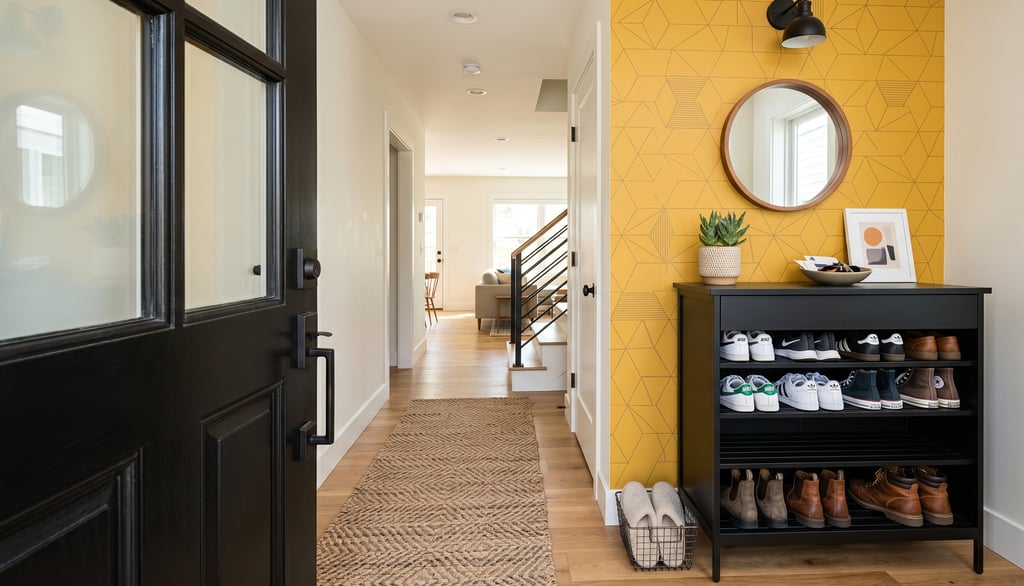
Rental-friendly option: A freestanding shoe cabinet with doors hides the mess entirely and doubles as a surface for keys or mail.
One often-overlooked trick: angle your shoe storage near the door, not against the farthest wall. The shorter the distance between "taking shoes off" and "putting shoes away," the more likely it actually happens. Convenience beats willpower every time.
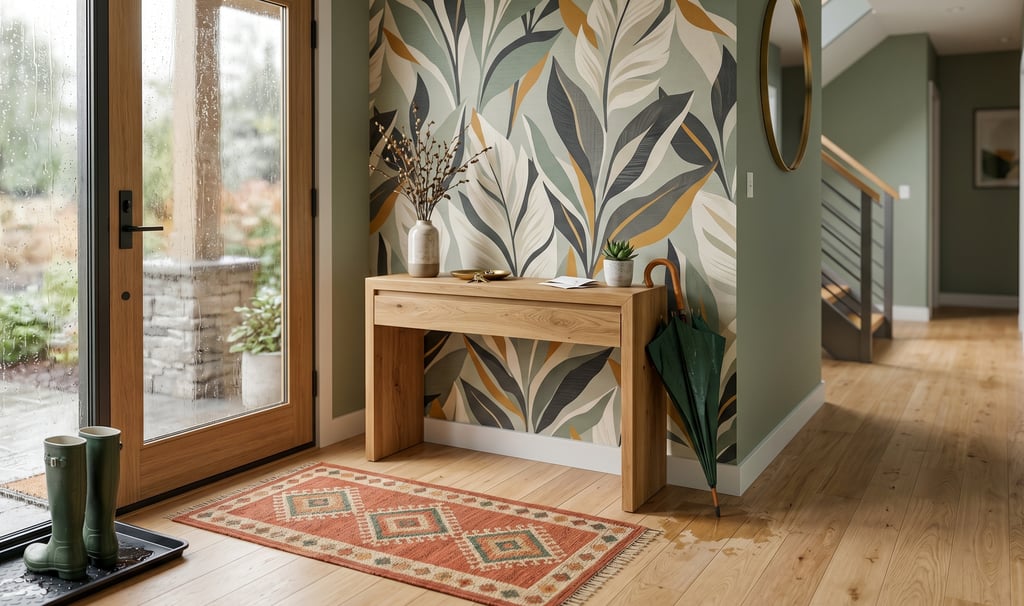
If the wall behind your shoe storage feels a little flat, a peel-and-stick wallpaper accent is an easy weekend upgrade — it adds personality without requiring you to commit to paint or a full renovation, and it's renter-friendly since it removes cleanly.
Shop this fix:
Mistake #3: Keys, Mail, and Sunglasses Have No Home
Q: Why does the same family lose their keys three times a week? A: Because the keys never had a designated spot to begin with.
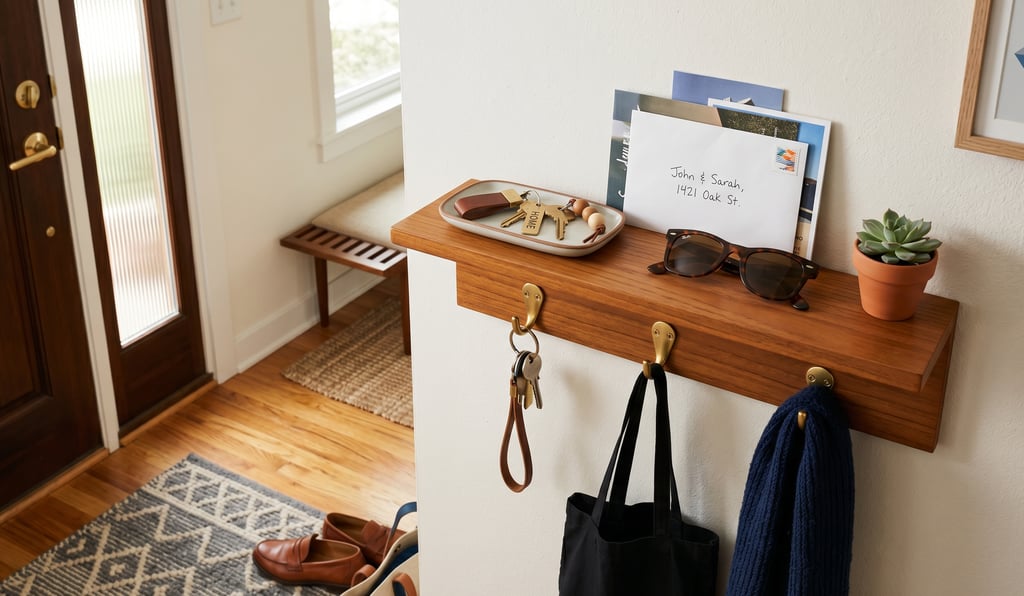
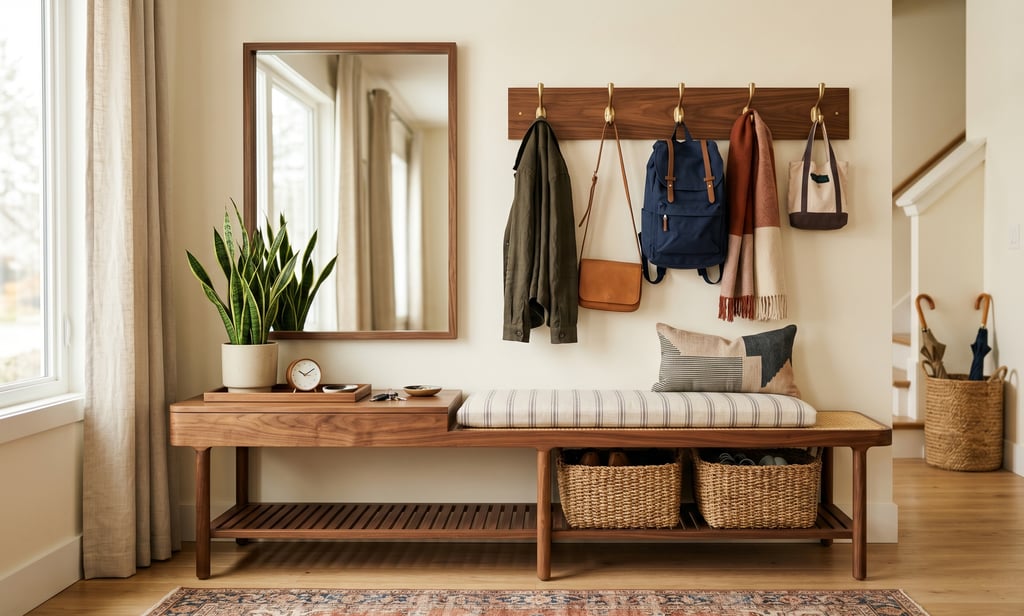
This is one of the simplest fixes on this list and one of the most impactful. A wall-mounted key hook rack, installed at the height of your front door, eliminates the daily "has anyone seen my keys" scramble almost overnight. Pair it with a small mail organizer or a shallow catch-all tray, and you've solved three chronic clutter sources in one go.
Here's the part most people miss: variety matters. Hooks alone don't account for mail, sunglasses, or loose change. A combination piece — hooks plus a small shelf, or hooks plus a mounted mail sorter — covers more ground than hooks by themselves. If wall space is limited, a wall-mounted floating shelf with hooks underneath is a space-saving two-in-one solution.
For households with kids, consider labeling hooks by name or color-coding them. It sounds small, but it removes the daily negotiation over whose stuff goes where, and it gives even young kids a clear, repeatable habit to follow.
Shop this fix:
Mistake #4: Ignoring the Vertical Space
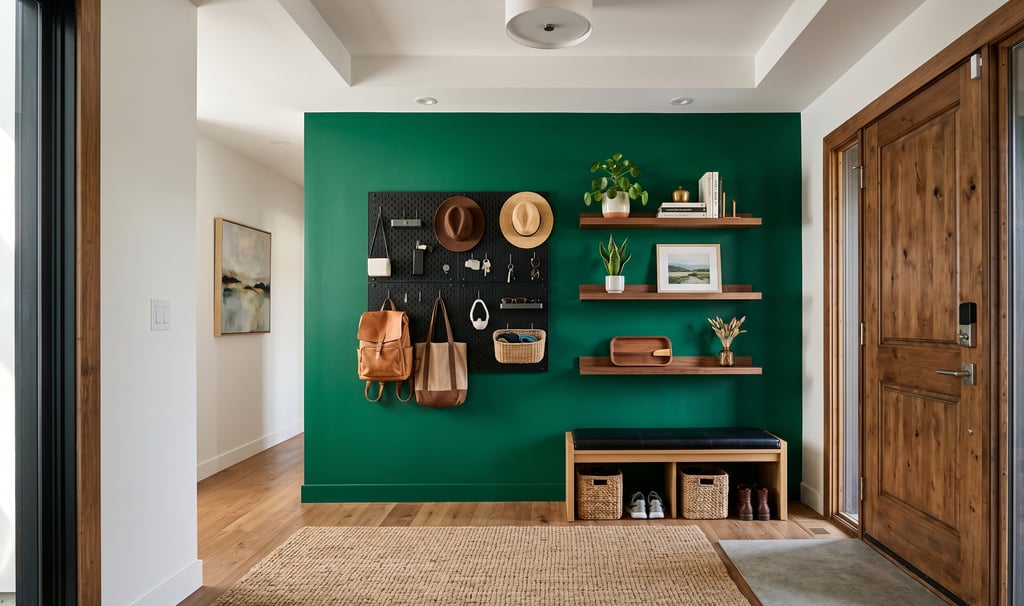
Most entryways are narrow, which is exactly why so many of them feel cramped and cluttered. The instinct is to fight for more floor space — but the real opportunity is usually above eye level. Walls are free real estate, and most homeowners barely use them.
A few ways to put vertical space to work:
Add a floating shelf above your console table for baskets, books, or decorative storage.
Install pegboard or grid wall panels for a flexible, ever-changing organization system.
Mount a tall, narrow cabinet instead of a wide one — it stores just as much without eating up walking room.
Use over-the-door organizers on coat closet doors for an extra 6 inches of storage you're currently wasting.
Going vertical also has a psychological perk: it draws the eye upward, which makes a small entryway feel larger rather than more crowded. A cluttered floor reads as chaos. A tidy wall, even a busy one, reads as organized.
Shop this fix:
Mistake #7: Choosing Style Over Function
Pinterest-perfect entryways are everywhere, and it's tempting to copy one exactly — but plenty of gorgeous setups fall apart in real life because they weren't built for actual daily wear. Light-colored rugs show every muddy paw print. Open baskets without lids collect dust. Delicate finishes scratch the moment a backpack gets dropped on them.
Before you buy anything for your drop zone, ask:
Can this surface handle wet shoes, dripping umbrellas, and dirt without staining?
Is this material easy to wipe down in under a minute?
Will this still look good after six months of actual use, not just the first photo?
The best entryways balance beauty and durability — they look intentional and hold up to real life. A patterned or darker-toned rug hides everyday wear far better than a plain pale one. Sealed wood or metal finishes outlast unfinished or painted surfaces. And a boot tray by the door catches moisture before it ever touches your flooring, protecting your investment in the rest of the space.
Want both style and durability in one move? Look for a wipeable, scrubbable wallpaper. Modern peel-and-stick options are vinyl-coated, so a bold pattern can sit right at the entry without worrying about scuffs, splashes, or the occasional muddy handprint.
Shop this fix:
Introduction
Every home has one: that small stretch of floor by the front door where shoes pile up, mail goes to die, and somehow a single glove always ends up alone on the floor. It's called a "drop zone" for a reason — it's where life gets dropped the second you walk in. The problem isn't that you need one. The problem is that most drop zones are designed (or rather, not designed) in ways that guarantee clutter.
The good news? Almost every entryway mistake has a fast, affordable fix. You don't need a renovation — you need a system. Below are the seven slip-ups we see most often, plus practical ways to turn chaos into a space that actually works for your family.
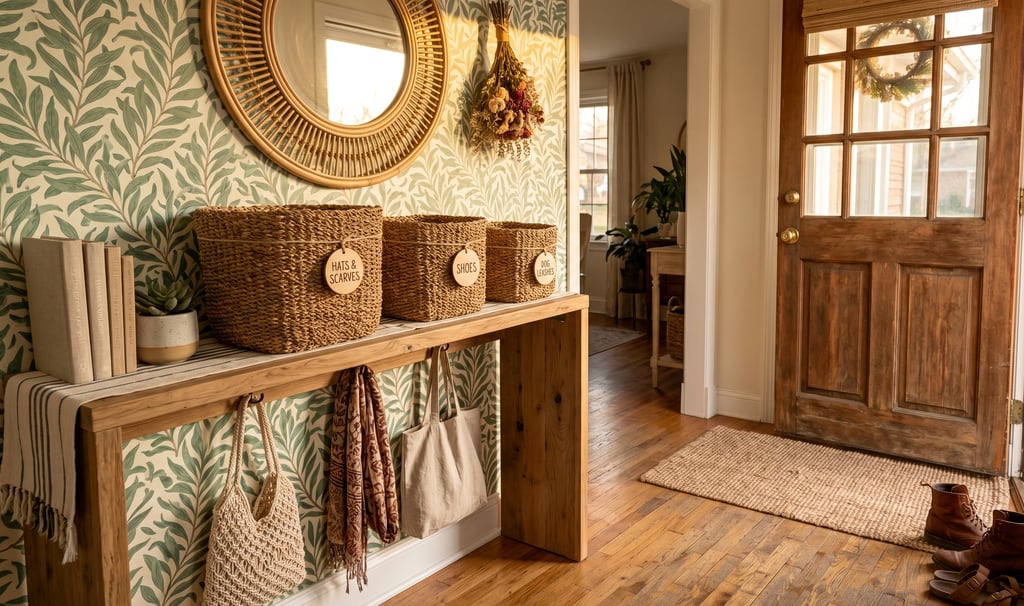
Design Tip: A patterned wallpaper accent wall is one of the fastest ways to make a drop zone feel like a designed space instead of an afterthought. The key is restraint — a soft, tonal pattern that echoes your existing wood and metal finishes will tie a room together far better than something bold and attention-grabbing. We've worked this detail into several of the images throughout this post.
Mistake #5: One Giant Basket for "Everything Else"
The catch-all basket feels like a solution, but it's often the opposite. A single oversized bin where mittens, dog leashes, sunscreen, and loose receipts all live together isn't organization — it's just delayed clutter. Within a month, nobody can find anything in it, and it becomes a permanent fixture you're embarrassed to let guests see.
The fix isn't to ditch baskets — it's to use more, smaller ones, each with a specific job. Try this approach:
One basket strictly for outdoor gear (dog leashes, umbrellas, sunscreen)
One basket for seasonal items (gloves and hats in winter, sunglasses and bug spray in summer)
One basket per family member for personal grab-and-go items
Labeling each basket — even with something as simple as a small tag — turns a vague "stuff bin" into a system everyone in the house can actually follow. Woven baskets also do double duty aesthetically, softening an entryway that might otherwise feel all hard edges and hooks.
For an extra layer of warmth, consider backing your basket shelf with a botanical or Moroccan-print wallpaper. It plays beautifully against natural textures like rattan and seagrass, and it turns a purely functional shelf into one of the prettiest corners of the room.
Shop this fix:
Mistake #6: Skipping a Place to Sit
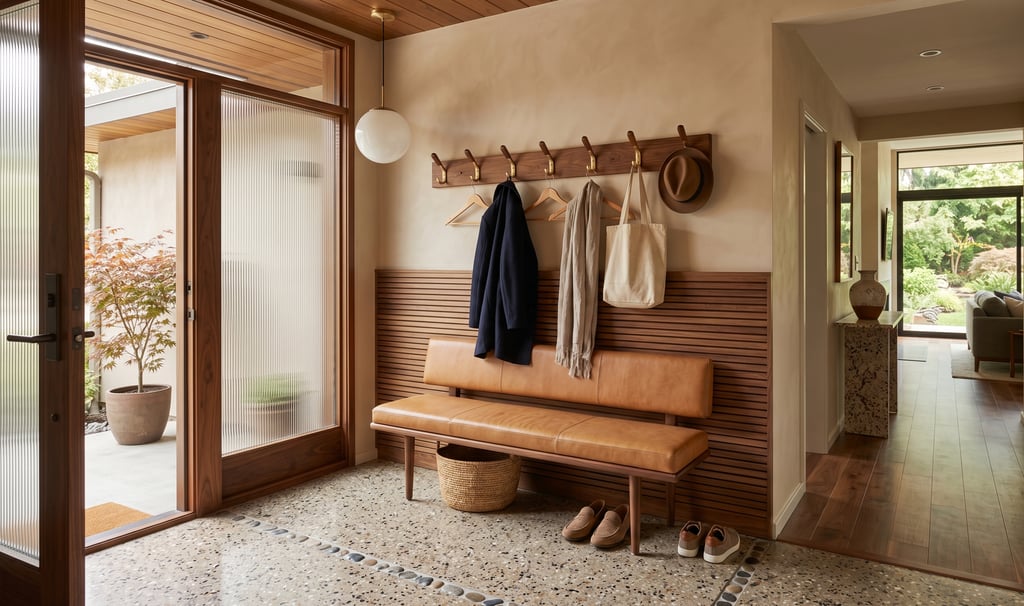
It's a small detail with a surprisingly big impact: if there's nowhere to sit, putting shoes on and taking them off becomes an awkward hopping routine, usually performed while balancing on one foot against a wall. People skip this step entirely — and shoes end up scattered exactly where they were last kicked off.
A bench solves this instantly, but it doesn't need to be large or expensive. Options that work well in tight entryways include a slim upholstered bench, a backless storage ottoman that doubles as extra seating for guests, or even a sturdy stool tucked into a corner when not in use. The goal isn't furniture for furniture's sake — it's removing the friction that causes shoes to land on the floor instead of the rack.
Bonus tip: if your bench has storage underneath (a lift-top ottoman or a bench with cubbies), you've just solved two problems with one purchase — seating and shoe storage, combined.
Shop this fix:
Bringing It All Together
A mudroom is genuinely nice to have, but it's not the only way to give your pet — and your floors — the structure they need. Once you start treating "pet zone" as a function rather than a room, a corner, a wall, or a single piece of clever furniture can do everything a mudroom would, just scaled down to apartment size.
Start small. Pick one section from this list — maybe the paw-cleaning station, since it solves the most immediate daily annoyance — and get that piece in place before moving on to the next. Within a few weekends, you'll have a fully functional, good-looking pet zone tucked into a space you didn't even realize you had.
Tools That Make This Project Easier
A few small tools go a long way when you're mounting shelves, hooks, or organizers. None of these are required, but they'll save you time (and drywall patches) if you're doing this as a weekend project.
Follow Us
Contact
© 2025. All rights reserved.
2 Fat Cats Home Decor brings stylish, cozy inspiration from living rooms to bedrooms and beyond — helping you create a warm, inviting home you'll never want to leave.